First a bit more about the photographs, and why Susan decided to donate it to us. Richard Baxter Booth was a Crewe dental surgeon, and this photograph collection was compiled by him in the 1890s.
Susan says “I found the album for sale on eBay, and Baxter Booth’s granddaughter has been shown the images; her father, Walter (Baxter Booth’s son) was also a dentist and keen photographer. This is album number two; number one is lost unfortunately. Baxter Booth’s dental surgery was in the row of buildings on Crewe Market Square that was replaced by Marks & Spencer, it was the last one on the left on the corner of what is now Queensway. After his marriage he lived at Oaklands in Haslington; he was an active member of the Crewe Cycling Club, the Crewe Alexandra Cricket Club, and Crewe Golf Club. All the images are 'Kodak no. 2' prints”. Baxter Booth had previously lived at Fields Farm, Haslington, rented from the Crewe Estate.
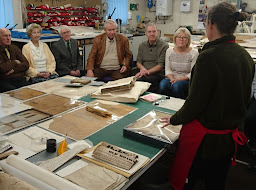
Once we had received the collection and Susan had completed our donation form, the photographs were passed to one of our conservators, Angela.
Angela says, “The original binding had completely failed, so the loose album pages were cleaned with a plastic eraser and placed into custom made polyester sleeves and then put into an acid free folder. These preservation measures will protect the album pages and photographs when they are being handled and also protect them from dust and any fluctuating environmental conditions they may encounter.”

Next, the collection was looked at in more detail by our Local Studies Librarian, Heather. She tells us, “The collection was added to CALM, our collections management system, so that it could be found by staff, researchers, and members of the public online. CALM generated a unique 6-digit reference code for the item, 231804. It was also given a class number of VPH96, which helps to locate the item in our visual collection. Here I am storing the collection away in one of our strongrooms, in an archive box, and where temperature and humidity levels are monitored.”

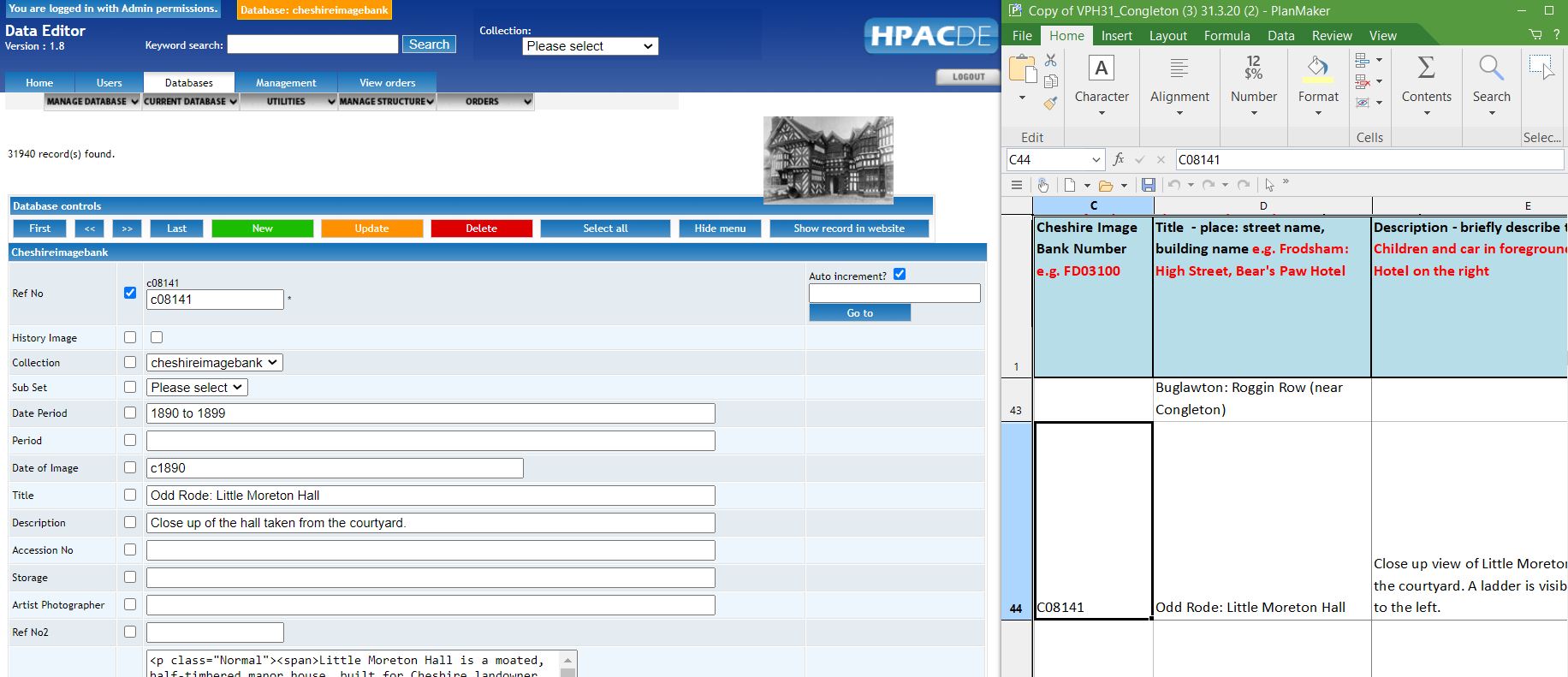
Another of our volunteers, Helen, was tasked with looking at each individual photograph and indexing it onto a spreadsheet.
Helen says “I am currently a volunteer working on the photographic archives at Duke Street, finding out any extra information about the subjects of the photographs and then entering all the information onto a spreadsheet. These spreadsheets, such as the one I worked on for the Richard Baxter Booth collection, will allow the public to access the information online, widening public access to the contents of the archives.”
This should help any researcher interested in the collection to find the exact photograph most useful to them. Helped by Susan’s knowledge of the area at the time, and of the photographer Richard Baxter Booth, this task is now complete. Please speak to a member of staff if viewing this spreadsheet would be helpful to your research.

We have not yet digitised the whole collection, but a selection of our favourites are featured below. The album contains scenes and events in Crewe, such as the Crewe Flower Show and a football match, as well as buildings (the Mechanics Institute, Town Hall, pubs, churches), and also features the residences of other doctors/medical men in Crewe such as Dr Atkinson’s residence “Mirion House” on Earle Street. The photographer also used his friends, family, and pets as his subjects.


The next step will be to have more of this fantastic album digitised and available on the Cheshire Image Bank website.
If this blog has inspired you to consider donating an item or collection to us, then we would love to hear from you. Please do contact us first, as we can then check that the item fits with our collection policy and is not something we already have. You can get in touch with us via our website, telephone 01244 972574 or email recordoffice@cheshiresharedservices.gov.uk.
All of these photographs and more are available to view at Cheshire Record Office in Chester.