Pages

Showing posts with label First World War. Show all posts

Friday, 14 February 2020

Absent Voters' Project—Katherine's rare and unusual ranks

After running for the past six years, with 1000's of hours of work put into it, we have finally completed an amazing project and are ready to share the results with you. The Cheshire First World War Servicemen's Index Spring 1919 Absent Voter's Lists online (or Absent Voter's Project for short) is now complete! The 1918 and 1919 Absent Voters' lists are an invaluable resource for anyone seeking ancestors serving in the First World War. Absent Voters' lists give names and addresses, details of individuals' service, service number, unit or ship. With the help of volunteers, these lists have been transcribed and are fully searchable.
You can find the site here and a walk through of how to use the site is on our YouTube channel here. These coming blogs are written by our volunteers who made this possible and give an insight into what they enjoyed about the project.

Working on the Absent Voters Lists for 1919 has immersed the volunteers in the world of the men and a few women, who were registered to vote during the First World War but who were not at home to do so. The database records names, addresses, ranks, regimental numbers and units for members of all the forces. This means that it should also be possible to search not just for the family member you are researching but other force members in their household at the time. Some families I transcribed sent three or four sons to war.


A section of the absent voters list showing three males from the same family in the military.
Three of the same family sent to war

Between the Cheshire Archive volunteers thousands of entries have been transcribed. Some of the most common ranks in Cheshire feature Private, Corporal, Lieutenant, Able Seaman, Air Mechanic and Gunner whilst the rarer ones are Artist, Writer and Bandsman. Some of the common units feature the Cheshire Regiment, Royal Engineers, Royal Field Artillery, Royal Garrison Artillery, Royal Army Medical Corps, the Royal Navy and the Royal Air Force. The less common ones that I transcribed were the Royal Canadian Horse Artillery, a camel corps and the Royal Inniskilling Fusiliers. The women, numbering less than five, that I transcribed, were nurses or matrons in the Royal Army Medical Corps. An overview of the Cheshire lists shows the enormous range of ranks and units from every corner, offering insight into the enormous contribution made by our county.  


A screenshot of the absent voters' website showing the details of a nurse serving in the war.
A nurse's details are listed


Being part of the Absent Voters project has been fascinating. Hopefully the newly transcribed records will provide vital information for anyone interested in researching a family member who served a hundred years ago, in the Great War.   


This project was funded by Cheshire East Reflects.

Absent Voters' Project— Mike and Military History

After running for the past six years, with 1000's of hours of work put into it, we have finally completed an amazing project and are ready to share the results with you. The Cheshire First World War Servicemen's Index Spring 1919 Absent Voter's Lists online (or Absent Voter's Project for short) is now complete! The 1918 and 1919 Absent Voters' lists are an invaluable resource for anyone seeking ancestors serving in the First World War. Absent Voters' lists give names and addresses, details of individuals' service, service number, unit or ship. With the help of volunteers, these lists have been transcribed and are fully searchable.
You can find the site here and a walk through of how to use the site is on our YouTube channel here. These coming blogs are written by our volunteers who made this possible and give an insight into what they enjoyed about the project.

LOOKING FOR A FIRST WORLD WAR SERVICEMAN'S RECORD?

When you first start to researching your ancestors military history during WWI, why is it so difficult to obtain their official service records? The conflict took place just over one hundred years ago; so surely these documents would be the most detailed set of records of an individual that you will find anywhere! Unfortunately even the resources of the modern internet do not provide this facility. The truth is that most soldiers’ service records dating from the First World War were sadly destroyed by Luftwaffe raids on the old Public Record Office during the London blitz. Only a few records survived the bombing and fire damage caused to the record office. Consequently information on ordinary servicemen’s files is very limited.

A section of an absent voters page, showing printed info and extra annotations
A sample of the extra information you can find in the lists

 
My Grandfather served as a soldier during the Great War of 1914 - 1918, but I had no information to start with; apart from his known address. I began my search with the Absent Voters List (AVL) at the Cheshire Record Office, and this document provided me with his rank, service number, unit and division in which he served. Eureka! This was the start of an unimaginable story of a hero. That is why I volunteered to help with transcribing the Absent Voters List.

Teaming up with other distance transcribers working on this project unlocks priceless data for both amateur and professionals alike. In the pursuit of military, family, and local history studies it has become a valuable asset as an online research tool.

A photo of Mike
Mike


Mike
Distance Transcriber.


This project was funded by Cheshire East Reflects.

Absent Voters' Project— Tina's Experience

After running for the past six years, with 1000's of hours of work put into it, we have finally completed an amazing project and are ready to share the results with you. The Cheshire First World War Servicemen's Index Spring 1919 Absent Voter's Lists online (or Absent Voter's Project for short) is now complete! The 1918 and 1919 Absent Voters' lists are an invaluable resource for anyone seeking ancestors serving in the First World War. Absent Voters' lists give names and addresses, details of individuals' service, service number, unit or ship. With the help of volunteers, these lists have been transcribed and are fully searchable.
You can find the site here and a walk through of how to use the site is on our YouTube channel here. These coming blogs are written by our volunteers who made this possible and give an insight into what they enjoyed about the project.

My name is Tina and I have been volunteering on the Absent Voters project for 2 years. As a qualified archivist I always get involved in as many projects as I can but I also have a keen interest in history of the World Wars and have volunteered on projects such as the Merchant Navy Crew List transcription project and Operation War Diaries, so this project really appealed to me.

A photo of Tina
Tina

I have submitted entries for mostly the Wirral parishes, starting with Irby, where I live. I was struck by the socio-economic information the pages offer for their parish. For example, Thurstaston had very few entries and there were several Officers, compared with larger towns where there many more entries with a wide variety of ranks, but a lot of Privates and Labourers

It was interesting spotting a few women included in the list serving in nursing roles such as Laura Ellen Tuson of Silverdale Road, Lower Bebington who was serving in an auxiliary hospital in Myrtle Street Liverpool, and Violet Baxter of Thornburn Road, New Ferry, who was serving at 1st Southern General Hospital, Birmingham.

I've enjoyed learning all of the units and regiments and ranks/roles in the British Armed Forces and seeing the wide variety of units Wirral and Cheshire men entered.

Cecil Arbuthnot St George Moore's absent voter entry
Cecil Arbuthnot St. George Moore


There were also some fantastic names. Cecil Arbuthnot St. George Moore, a Lieutenant in the Royal Engineers, was just one that I couldn't help researching further.


This project was funded by Cheshire East Reflects.

Wednesday, 2 October 2019

Stranded at Crewe - the 1919 National Rail Strike


This blog post was written by Susan Chambers and focuses on the experiences of some of the soldiers stranded at Crewe during the National Rail Strike of 1919. You can read more about the Crewe Sailors and Soldiers Rest in Susan's previous blog posts. 


The road passing Crewe Station - the ‘Rest’ was on the left

The year of 1919 was drawing into autumn, and the men who had fought in the recent Great War were still being demobilised, repatriated or relocated to other troubled spots across the globe.

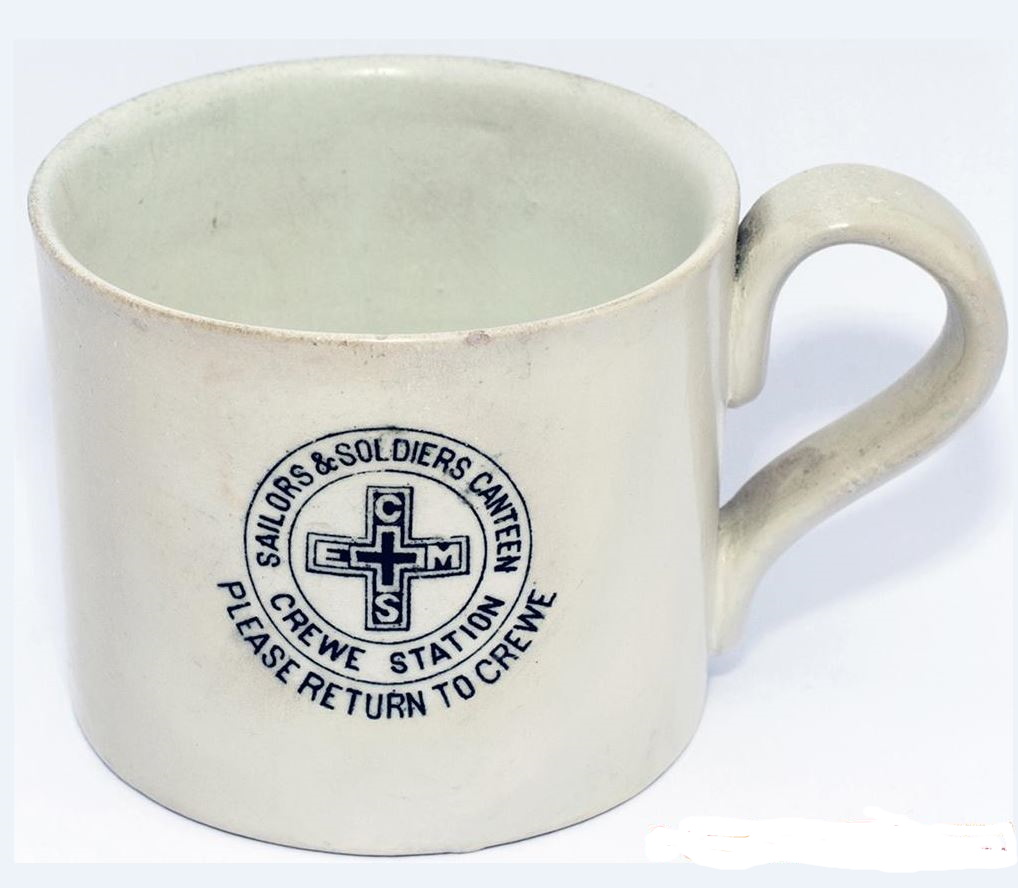
Many soldiers were changing trains at Crewe Station and indulging in a meat pie, sandwich or cake and a mug of tea, coffee or Oxo at the Sailors and Soldiers Rest while they waited.

However, on the night of Friday 26th September a period of disruption lasting nine days began. A strike of 400,000 railwaymen (members of the NUR and ASLEF trade unions) had been called in response to a reduction in the rates of pay that had been negotiated in the war years.

Extract from the Railway Service Journal, (Journal of the Railway, Clerical, Administrative, Supervisory, Professional and Technical Staff)  1919. RCA is Railway Clerical and Administrative- who decided to stay neutral.

During the strike over 300 men visited the Rest, many of them unable to go any further. According to the Cheshire Observer, some travellers stuck at Crewe converted train compartments into temporary homes, and a wealthy American gentleman at Crewe who offered to pay generously for a special train to London was refused and had to finish the journey by car!

The Rest visitors’ book was well used during this period, with comments ranging from those simply stating that they were stranded to slightly more witty offerings:

Comment made by L. Cpl. J. Kewley and Cpl. R Kewley of the South Lancs Regiment, otherwise known as the "The Pe’kewley’ar Couple”


Other comments were as follows:

From  another South Lancs Rgt man heading for County Cork:
Stranded at Crewe after 9 hrs ride from London through strike’

Some were heading for the Army base at Ripon:
Stranded at Crewe owing to Railway Strike, just returned from Germany, WHAT A reception’.

Several were heading for the base at Prees Heath in Shropshire and grateful for the Rest :
Stranded at Crewe, a good welcome at Rest Hut’
Just arrived to get demobbed, could not go any further than Crewe at CEMS’ (Church of England Mens Society, the organisers)

Corporal Essen of the Northants Regiment (we forget how young many of these lads were):
‘Demobb on My Birthday, 20. Held up owing to Strike.’ 

Driver S. Hooley, Royal Army Service Corps heading for London:
Stranded owing to the Strike after fighting 3 ½ years for liberty’

Two members of the 1stArgyll & Southern Highlanders:
Gott strafe the Strikers’ and ‘Double ditto’

Lots of other comments:
Fighting for your Country for 3 years, Tommy has to walk home’
‘Fortnight’s rest on Crewe Station’
‘A Digger stranded in a strange town’ ‘Saved from the Streets’
‘Stranded owing to our “Comrades” the Railway men’
‘How little one thinks of another’
‘No money no socks no boots’
‘Roll on October, then what-oh for India (Punka fand)’
‘Down with J.H Thomas’  (ie General Secretary of the NUR)

From 2 members of Kings Own Yorkshire Light Infantry from Sheffield:
‘Damn NUR’  and ‘Another Pint Please’

Someone wished them well…
Every wish for a Striking Success’

Many were just grateful for what the Rest provided:
Most grateful for kindness and comfort when stranded’
‘Stranded – Sweet cup of Tea’
‘This place indeed is a friend in need, from Palestine’
‘Cheered 4 weary comrades. Stranded on Demob’
‘Many thanks for a good haven’

From W. Lloyd (Southport) of the 1st Battalion The King’s Regiment, late Liverpool Pals (interesting handwriting!) Says he visited the delightful place on the day he proceeded for demobilisation. His mate from Walton says similar.


The stranded troops were from many different units including the Army Cyclist Corps, Sherwood Rangers, Royal Air Force, Royal Army Medical Corps, Australian N&M Forces, Royal Army Service Corps, Royal Engineers Signals, HMS Eagle, HMS Kendal, 1st Battalion Welsh Guards, Argyll & Southern Highlanders, RASC Remounts, Royal Marines, Machine Gun Corps, SS Dakar, Tank Corps and many other Regiments throughout the country. Many were heading to or from various camps such as Brocton, Grantham, The Curragh, Aldershot, Tidworth and Woolwich.

After nine days of strike action, the government agreed to maintain wages for another year. Subsequent negotiations resulted in the standardisation of wages across the railway companies and the introduction of a maximum eight hour day.


Friday, 26 July 2019

June 1919 at the Sailors and Soldiers Rest


This blog post was written by our volunteer Susan Chambers. 


The visitors' book from the Sailors and Soldiers Rest at Crewe Station (D 4998) records over 1600 troops passing through in June 1919, many of them jotting down various comments alongside their names and service details. Some were travelling to and from various Army bases from all over Britain, (eg Sniggery, Lark Hill, Aisne Barracks) and many were returning from Europe and further afield: Dublin, Cologne, Mons, Constantinople, France, India, Mesopotamia, Salonica, Palestine, Eastern Turkey, Alexandria, North Russia to name a random few.

Sailors from HMS Caesar, Dauntless, Valkyrie, Erin, Caledon, Conqueror, Lion, HM Submarine L17, Minesweeper Buckie, were calling at the Rest, no doubt for the endless supply of mugs of tea!

Prices of essential items from the Rest's records. 


The visitors books are a fascinating source of information on the aftermath of the Great War, and the time it took to disperse the troops since the Armistice; and so many of them were off to deal with other problems in the world, such as Ireland, India and Russia.

A number of Canadian troops based at Kinmel Park Dispersal Camp (near Rhyl), were passing though the station after having had a brief  break before sailing home. Several soldiers had died in early March in a riot at Kinmel, prompted by their frustration at the slow progress in repatriating them, which entailed  a complex business of medical testing, clothing and equipment issue, and long administrative form-filling, after which they were sent on leave before returning to Kinmel ready to set off for Canada.  

However on their return to camp they often found that their allocated sailing was cancelled because of strikes or unavailability of a ship (or even preference given to Americans, it was suggested).  The incidents in March had stemmed from their bitter frustration.


Comments from the Canadians included:
                                           
‘another week to stop in British Isles’

‘me for that next boat to Canada’

‘Coming back off last eight days leave with Big head to be Demob.’

‘Big Head before Demob’ (Big Head -?hangover?)

‘Returning to “Gods Country” next sailing’

Some of the Canadians signed themselves as being from the ‘Little Black Devils’ (Royal Winnipeg Rifles).

Several men from the 3rd battalion North Staffs Regiment Band were heading for the Curragh Army Camp, County Kildare to assist with the Irish troubles;  

Gassed at Mons’  

'The above is a photo of an aeroplane out of sight’

‘I wish I was a Corporal’

On June 24th and 25th a total of twelve men of the 2nd Battalion of Seaforth Highlanders signed the book, recording that they had arrived from Fort George in Inverness and were on escort duty for German soldiers being taken from Scapa Flow to an interment camp near Oswestry. There was some confusion amongst the allies as to what would be done with the German fleet, but rather than hand it to the enemy the Germans had ‘scuttled’ their vessels (sunk them) on June 23rd:


‘Escort Duty. Taking Jerry from Scapa Flow to Oswestry, Wales (some job)’


 Many men were from Prees Heath, the huge Army camp near Whitchurch, and one from the Royal Army Pay Corps noted:

'Diddled out of breakfast this morn at Prees Heath Dispersal Station due to usual Army muddling. Very glad I was diddled after enjoying your excellent fare in this establishment’.

From two Royal Enniskillen Fusiliers: Get a new pen’ ; ‘Here Here a New Pen, yes’.  

And later the same day from an Australian: ‘Good…not the pen’ and from a Mons soldier ‘This is a fine place but a D….rotten pen’.

It’s interesting to note how often ‘civility’ is mentioned, as if the troops were not accustomed to it:

'First civility received since 1914’

'Civility, which is a lot’

'Respect & Civility at Crewe YMCA’  


‘It is a great pleasure to be in a civilised country’,  from a Corporal in the Royal Scots just returning from Russia, and from a Sergeant travelling with him ‘No Blockhouse, No Snow, No Bolos’ (a sort of machete much used in WW1)


A few random jottings:

‘Watching others get their ticket (official discharge) is good sport, some may say, but I don’t. You soon get stricken down with the latest disease “Dispersalitis”.

‘Dinkum, everything in tip-top order’ from a member of the Royal Australian Air Force Base in Queensland.

24th Battalion Machine Gun Corps ‘Badly Wants to get Home. London’

‘Good luck to the lady who gave us the dinner, her praises I shall sing for ever & ever’

‘Tired , hungry & broke but received a Hearty Welcome’

‘Demobbed today, plenty happy and glad’

‘Any volunteers for North Russia?’

‘A friend  in need after 36 hours. The Last lap’

‘Tray bonne’ ‘Tray bond’ ‘Dobra’ ‘On his way home Napoo’

‘Happy Though Married’  ‘Happy and not Married’ followed by ‘Lucky boy’

‘Going to see my girl’.


Friday, 24 May 2019

The Month of May 1919 in the Sailors and Soldiers Rest


Crewe: Soldiers' Sailors' Rest, Nantwich Road (ref. c00801)


The signing of the Armistice in November 1918 ended the major part of the hostilities of the First World War. However, it took many more months to organise the return of the vast numbers of men scattered across the globe. 

One of our previous blog posts, “Crewe Station - the Heart of Britain’s Railways in World War I”, focuses on the Sailors and Soldiers Rest at Crewe Station and the two Rest visitors’ books held at Cheshire Archives.

These books give a fascinating glimpse into the experiences of the men that stayed at the Rest. Many called in at the Rest for a cup of tea, a meal, or a bed for the night, while others killed time between trains. 

Their comments often included grateful remarks about the hospitality, their relief at being demobilized, or regret at having more time to serve after a spell of leave.


A copy of a local news magazine published in March 1916 by Eardleys, the major printing company in Crewe, is pasted into one of the visitor books and states:

“The crude verses the men have written, the sometimes misapplied quotations, and the slang methods of expression, form an interesting study and throw a curious light upon the varied personality of the visitors.”

Battles were said to be fought over again, trench incidents recounted, and, according to Eardley, “…one has an excellent opportunity of studying the tranquil humanity which makes Tommy and Jack conspicuous among the fighting units of the world”.

In the month of May 1919 over 2,000 men passing through Crewe signed the book, well illustrating the world-wide nature of the Great War. Destinations included Cape Town, New York, Miami, Victoria BC, Adelaide, Nicaragua, Johannesburg, Moose Jaw Saskatchewan, and Arkinsaw, and of course many places in Britain including Chester. 

Journeys had started in Germany, Italy, Palestine, France, Bulgaria, Malta, naval bases from Scapa Flow to Plymouth, and  RAF airfields including Shotwick, (a few miles from Chester), and RAF Shawbury in Shropshire.  Many were travelling to and from Prees Heath, a massive army camp near Whitchurch.

A number of the troops, including many from the Royal Field Artillery, were heading for North Russia, via Crewe, as part of the Russian Relief Force. This was partly to keep the Bolsheviks back whilst the allies were evacuated and also for other plans that Winston Churchill was said to have devised.


Some other messages from the troops included:

“Fed up waiting at Crewe 5 ½ hours”

"Is the bacon still rationed? Once more unto the breach”

"Treated extremely well at Crewe”

“Always open when others are closed”

"Waiting for an airship”

“Cymry am byth”

“Tray Bon”

“Puggled to the wide” (said more than once!)

“I wish the pubs were open, I am dry”

“Here all night without a pint” (the Rest was established by the Church of England Mens Society in a Temperance Union mission room...)


And from a member of the Field Survey Battalion, Royal Engineers:

“If on earth there is some bliss, It is this – It is this – It is this!”

It is interesting to attempt to trace the details of some of the men who stayed at the Rest using online resources. For instance, Acting Lance Corporal Walter Shard, formerly a joiner of Towers Cottages, Poynton, joined up in September 1914. 

He was a hospital orderly in the Royal Army Medical Corps for 3 ½ years and in August 1918 he contracted Trench Fever, resulting in pains around his heart and shortness of breath.

He left the following heartfelt phrase in the Visitors' Book: 

“Happiest day of my life viz:- FINAL DEMOB”


This blog was written and researched by one of our volunteers, Susan Chambers. Susan will be blogging more about the Sailors and Soldiers Rest in the coming months - check back soon to hear more stories from Crewe!


Monday, 1 April 2019

Crewe Station - the Heart of Britain’s Railways in World War I


Crewe Railway Station
(Cheshire Image Bank c10557)
Throughout the years of the Great War a vital role was played by Crewe Station in Britain’s battle to keep men and supplies moving to where they were needed, at home and abroad. The station was a scene of constant activity, bustling and busy, day and night.

Holyhead boat trains, Scottish expresses, the Irish Mail, the London, Plymouth and Dover trains, the Travelling Post Office, ambulance trains bringing the wounded to northern hospitals, all called at Crewe.  Navy men going north to the Fleet at Scapa Flow, Army men heading south towards the Front in France and Belgium, plus vast supplies of shells and armaments all went by rail. Around 300 trains a day used this vital link, being shunted, marshalled and watered, before they steamed out again.


Crewe: Soldiers' Sailors' Rest
(Cheshire Image Bank c00801)
At any one time hundreds of soldiers and sailors could be seen around the station, awaiting their connections, passing the time in ambling along the platforms, taking a nap in front of the waiting-room fires, and sometimes joining in a round of ‘Tipperary’ to an accordion accompaniment.


Book-stalls, telegraph offices and refreshment rooms were always open, and so, from spring 1915 was the famous Soldiers’ and Sailors’ Rest, next to the station, where a meal and a bed could be had anytime of the day or night. Later in the war a trolley service with urns was set up to visit the trains which were only stopping for a short time, and to provide the troops with a welcome mug of tea before they steamed off again to continue their vital journeys. The station rest and refreshment services for military personnel in transit were organised by CEMS, the Church of England Men’s Society.

Crewe: Soldiers' and; Sailors' Rest
(Cheshire Image Bank c00802)

In the photograph above, the Soldiers’ and Sailors’ Rest visitors’ book can be seen on a stand in the centre of the image.  Twelve visitors’ registers were signed by 130,000 men since April 1915; the final two registers, covering 1919, are lodged with us at Cheshire Record Office (reference D 4998). These are a fascinating record of a brief spell in the lives of thousands of men a hundred years ago, some being demobilised, some going on leave, and some back to their regiments, many on long journeys to far distant parts.

A sample index of over 1000 men adding their names to the visitors’ book in March-April 1919 has been compiled by our volunteers. We will be posting extracts from the book on Twitter over the coming weeks – follow us @CheshireRO to keep updated!

Wednesday, 22 November 2017

Volunteer Stories: Connecting with a collection

In 2016, Sandbach High School student Zia Duncan first began examining our collection relating to the Knutsford Ordination Test School (collection reference D 3917). She had this very personal and emotional response to the material ...

It has been just over a century since the beginning of World War One in 1914, a war that lasted four years but took millions of lives away from families across the world. But for the ones that survived, they came back to a home that was very different. Boys who were pulled out of having an education at fifteen or sixteen came back as men who lacked the knowledge and training for future careers as the years that were supposed to be spent in school had been replaced by living in a trench. Their prospects seemed dim, especially for the poorer classes who could not afford the cost of re-learning all their missed years.

Using newspaper articles, photographs and written histories related to the school I was able to research the incredible story of the men who had had the courage and bravery to fight but now wanted to build a future for themselves. The building chosen to house this school was originally Knutsford Gaol, which had been occupied by German prisoners during the war. Due to the housing shortage it was one of the few remaining buildings left that could house the number of men, although it was grim, dirty and out-dated. After enduring the trenches, there were initially some doubts as to how the men would take the news, but fortunately they rose to the occasion. The students arrived at their new school on the 26th March 1919. The advance party, which was aided by a few local well-wishers, had worked very hard to get it ready in time (which meant cleaning up the mess of the German prisoners). Men would now enter their first term at Knutsford with “gallant and high-hearted happiness”.


Despite the obstacles that the residents of the Test School had to face, many of them completed their education in the subjects of History, Natural Science, English Literature and Greek (or Latin) to Test Examination standard and set themselves on the road for higher ambitions. For example, by the end of the Summer term in 1920, 155 men left for further education, 111 for universities and 44 for theological colleges. Through the dedication of the local people and the well-wishers who helped transform the dirty Gaol into a school, the former soldiers of a dreadful world war had managed to set themselves up for a bright, well-deserved future.


Volunteer Katherine Treacher has continued working on the collection as we anticipate there may well be interest in this remarkable institution in its centenary year in 2019. The collection has inspired her to visit sites connected with the School, including St John's in Knutsford where the men went to church. She continues the story ...

The primary aim of the Knutsford Ordination Test School was to educate young men from all backgrounds returning from the First World War having missed out on higher education, with a view to them following their vocation to become priests. The school spent two years equipping the men with an education that would give them access to theological college or university to progress on to ordination. The ‘test’ part of the school’s ethos referred to the testing of each student’s commitment and suitability for clerical life. One well-known figure involved in the teaching at the School was the Reverend Philip ‘Tubby’ Clayton of the Toc H movement.

By 1922 the Church of England had stopped funding the school and it became a voluntary organisation. With this came the necessity for the School to raise all its own funds and provide student bursaries with limited outside support. From then on the School’s existence seems to have been dogged by struggles to raise enough money to stay open.

The archive contains many interesting documents including Annual Reports that chart the progress of the School from its early beginnings until the early 1940s when funding became extremely challenging. They record the progress of the school from Knutsford Gaol, now the site of Booths supermarket, to the Hawarden Old Rectory, now the Flintshire Record Office. The School had moved briefly in the early 1920s to a large house near Knutsford Common but struggled to operate in cramped conditions. In 1925, the Gladstone family gifted the Old Rectory at Hawarden (new) Castle and £3000 for building works to enable the creation of a new, spacious school in grounds of nearly eight acres.

The Annual Reports also record the wide variety of activities, giving an impression of a lively and vibrant community involving sporting events, fêtes, festivals, musical concerts, plays, lectures, lantern shows and Quiet Days led by local bishops and other religious visitors. As the number of ordained old boys from the school grew, so subscriptions and donations from their parishes grew, helping to make the heyday of the school the late 1920s. The archive also includes copies of the School magazine Ducdame and magazines of the Knutsford Fellowship dating until the early 1970s.

There is also a card index which contains what appear to be the records of all the students who attended the School and notes about their nature, attendance and later careers. Comments such as ‘fond of girls…sacked!’ and ‘chief interest cars and films,’ are amongst the more colourful. This information might be of particular interest to researchers interested in tracing an ancestor who attended the School. Amongst other items that might be of interest are playbills, copies of exams, minutes, letters, Knutsford Fellowship directories and numerous photographs of the men. A number of photographs have names on the back or are early, signed studio portraits, but many more of these are not named. However, the spirit of School is apparent in the numerous group shots which emit happiness and pride.


Tuesday, 31 May 2016

100 years of remembering HMS Chester at the Battle of Jutland

Chester has not forgotten its link with HMS Chester and the men who served on her at the Battle of Jutland on 31 May 1916. If you visit Chester Town Hall this week you will find a small and touching exhibition relating to John Travers Cornwell VC prepared by Chester History and Heritage.

Correspondence between Albert E Horne of Cheltenham, who served on HMS Chester, and the Mayor of Chester indicates that he made regular visits to civic events from the 1950s onwards. In June 1970 he presented the city with a photograph of the 'Boy Cornwell' that is still held in our collections.

In November he writes again to the Mayor enclosing photographs taken at the opening of the 'Victoria Cross' pub on Jack Cornwell Street in his home borough of Newham on 15 September 1970. They appear here with Mr Horne's captions as a tribute to the shipmates and 100 years of remembering.


The six shipmates with two Ind Coope directors, Mr Green, Librarian and Chef


A chat over old times


Six Chester shipmates with Mrs Alice Payne, 80, Cornwell's sister

Wednesday, 27 January 2016

First World War Conscription: our Cheshire records

The Military Service Act introduced conscription to, and the right of exemption from, military service on 27 January 1916. Local tribunals were established to hear requests for exemptions. Local authorities were advised to destroy records in the years following the First World War – two sets of records were kept nationally and the Middlesex documents can be searched by name, place and profession and viewed on The National Archives catalogue Discovery for free.

What if the instruction to destroy the records was overlooked? For Cheshire this was the case in Macclesfield and Hale – the only two local authorities that we hold tribunal records for. A University of Chester student volunteer has extracted the details that follow to give us an idea of workings of the tribunal and the lives its decisions touched.

In Macclesfield minutes, case numbers rather than names are used to reference the requests for exemption so we cannot identify individuals granted conditional exemption, six month’s temporary exemption, three month’s temporary exemption or in certified occupations. Letter books, so copies of the tribunal’s correspondence, also survive allowing further insight into the role of the tribunal.

In advance of conscription ‘German guns that were captured in the war were to be exhibited in some Cheshire and Lancashire towns. Captain Gossett requested that they be shown in Macclesfield in order to place pressure on men into recruiting for the war.’ 13 November 2015

Replies to businesses and individuals place men in groups for postponement ‘not exceeding 10 groups from the number of group the attested man is originally placed in.’

The Hale tribunal minutes include names and details as to how this worked in practice and expand on the decision-making process with some fascinating insights.

22 February 1916 A dissented case - Mr Hendry, 21, from Hale, who had previously been postponed to group 11 and who appeared to claim the longest further postponement, was denied further exemption.

29 February 1916 John Steele appeared in support of his claim to have his son John Cecil Steele employed by him as a window cleaner and was given one month to find a replacement.

14 March 1916 Phillip O’Hara, a bricklayer, was not awarded exemption based on the grounds that the case has not yet been established.

21 March 1916 Mr Arthur Leslie William appeared to support his claim for absolute exemption on conscientious objection. No exemption was given and he was placed in a non-combat group. Mr Robert Lees supported his case for total exemption on the ground of conscientious objection. No exemption was given and he was placed in a non-combat group. Mr Thomas Neild, appeared to support his claim on behalf of his son, Jos Neild. Absolute exemption was given on medical grounds.

May 23 1916 Donald Gillies was given temporary exemption till 23 September 1916 and was not allowed to make a claim on any other ground other than his wife’s health. He accepted this. Fredrick Broad Smith, a solicitor, supported his claim for exemption on ground (a) and the case was adjourned whilst waiting for instructions as to the allowances for married men.

11 July 1916 Charles Harold Matley supported his claim on conscientious objection and other grounds, which included submitting a certificate as to his wife’s health. Exemption was not granted and he was placed in a non-combat group. The applicant gave notice of appeal. John Yates, an agricultural wheelwright, was allowed temporary exemption till 11 September 1916, as long as he remained in similar employment and joined the local volunteers.

18 July 1916 Thomas Dolan supported his claim on ground (a) and with his rejection by the Army Medical Board, the claim was withdrawn.

November 1917 Joseph Swindle, a hairdresser, was allowed conditional exemption due to the man complying with the requirements of the Hale Red Cross hospital in hair cutting for the wounded soldiers.

24 September 1918 Mr Astbury, a gardener, was given temporary exemption due to continuing work on the farm and being relieved from service with the volunteers. Edward Dillon produces a Baptism record to show that he is outside the military age required under the military service act.

A separate Tribunal Register states the numbers and names of men who are exempt from military service for specific reasons and how long for. For each tribunal they give the name and reason for exemption. They are divided into adjourned cases and new cases.

The wartime records of Hale Urban District Council are included in our online catalogue where you can find the reference numbers to request if you would like to visit and view the original documents.

Thursday, 26 November 2015

Diary of a somebody - Frank Simpson's war diary part 9

Frank Simpson (1863-1942) was a prominent figure within his native city of Chester. During the First World War he was Quartermaster of the Chester Volunteers formed for home defence in 1914. One of our volunteers has begun to serialise his diaries. Our ninth installment recounts an incident that appears in the guard room diary.


Saturday, July 15, 1916
At 3.a.m Saturday, July 15th Private S. H. Bengon arrested 2 deserters from the South Lancashire Regt (T. F) and after reposting the matter to the Sergeant of the guard, he escorted them to the local hall and handed them over to the police. It appears that as a foods train was preceding along the line, furthest away from the sentry, on its way to Chester the sentry noticed two men in uniform running along just in rear of the train. He challenged them, and blew his whistle for the guard, who quickly arrived on the scene and took the men in custody, removing them to the guardroom. The men said they were looking for their camp, but shortly afterwards acknowledged they had deserted from the camp at Oswestry. They asked the guard if the rifles were loaded. The men seemed famished and some of the guard gave them food they had bought for refreshment during the night. While this was going on a Sergeant and constable of the police enquired from no 2 sentry (at the Curzon park end of the footbridge) what the whistle had been blown for and they were informed that no 4 sentry had arrested two men on the lines. They then asked if they might cross the bridge and visit the guard-room; they were allowed to do so. The Sergeant then questioned the prisoners and they acknowledged to having deserted from the military camp at Oswestry, had got to Wrexham from where they walked to Chester and to avoid passing through the city they proceeded through Curzon Park and got on to the Railway. The police then asked if the guard would hand them over so that they might be taken to the police office by doing so it would save time as they could phone Oswestry and get an escort to take them back to the camp to be dealt with by the O.C. this was agreed to. The (two) sentries which had been placed at the entrance to the guardroom with fixed bayonets were then withdrawn and the sentry who first challenged them accompanied the police and prisoners to the police office. They were young men, one having served in France where he was wounded. Strange to say these men belonged to the same regiment (Territorial) as the guard the Chester Volunteers had replaced on two days before. The men were brought before the magistrates at 11 am the same day.

Thursday, 8 October 2015

Diary of a somebody - Frank Simpson's war diary part 8

Frank Simpson (1863-1942) was a prominent figure within his native city of Chester. During the First World War he was Quartermaster of the Chester Volunteers formed for home defence in 1914. One of our volunteers has begun to serialise his diaries. Our eighth installment fast forwards to June 1916, at which point Simpson has become Quartermaster of the Chester Volunteers.


Thursday, June 22, 1916

The men on parade this evening were asked to undertake ‘guard duty’ to which there was a good response. Particulars of the duties to be performed will be settled in a few days time. Twenty-two men took the oath and enrolled as volunteers. Nine Youths, between the ages of 16 and 18, were enrolled as volunteers and received brassards and coat badges.


Tuesday, June 23, 1916

Met the Adjutant, the Hon: secretaries and platoon commander J. E. Bennett at Old Bank Buildings. It was agreed to find a permanent guard for the Railway Bridge (Roodee) as requested at Headquarters, Stockport; the party went to the bridge where they were met by Lieutenant C. Smith who explained the duties. The Headquarters ask for 18 men- that is for the three shifts of six men who with an N.C.O would each be on duty for eight hours, but this will be arranged during the next day or two.

The Adjutant (Major Wilberaham) at the request of the Quartermaster instructed him to procure fifteen pouches for ammunition, the same to be charged to the Battalion. He also requested the Quartermaster to have the Rifles examined by the gunsmith as to their safety with ball cartridge. Each man on duty to receive a pocket of ten cartridges but not to break the package unless strictly necessary.

The ammunition to be handed over to the successive guard.

Corporal Edgar Williams was appointed acting company Quartermaster Sergeant of the Chester Company.

It was also decided that the Quartermaster should make enquiries as to the insurance of volunteers.

Thursday, 9 July 2015

Diary of a somebody - Frank Simpson's war diary part 7

Frank Simpson (1863-1942) was a prominent figure within his native city of Chester. During the First World War he was Quartermaster of the Chester Volunteers formed for home defence in 1914. One of our volunteers has begun to serialise his diaries. Our seventh installment looks at the fall out from the recruitment incident we learnt about in part 6. 


September, Saturday 5, 1914

I met, during the day, inspector Wymme, and he informed me that he had made a report to the Chief-Constable (of what took place last night) and that the chief had informed the Major, who had communicated with General McKinnon, and had also forwarded a copy to Lord Kitchener. During the day arrangements had been made so that the recruits that night would have the use of the Northgate skating rink, which they did. This skating rink, not being used, should have been requisitioned earlier; this would have saved much unpleasantness. 

The City magistrates having passed an order that all public houses and hotels close at 9pm and not open before 9am. It was enforced for the first time this Saturday evening. The various clubs are included in this order as far as intoxicating drunks are concerned. Colonel Neville, now in charge at the castle, has issued an order that any publican supplying drink to a soldier in uniform before 12 noon, or after 9pm the house will be put out of bounds.

September, Monday  7, 1914

Today Monday 1300 men headed by two bands came by rail to Chester and marched through the streets to the castle where they all enlisted in Kitchener’s army. The men came from Port Sunlight, Wallasey, and Ellesmere Port. Sir William Lever, and Mr Gershom Stewart, M.P. for Wirral, led the contingent. General Mackinnon addressed the men upon their arrival in the castle square.
(Side note – “These men eventually became the 13th Battalion”).

Friday, 3 July 2015

Diary of a somebody - Frank Simpson's war diary part 6

Frank Simpson (1863-1942) was a prominent figure within his native city of Chester. During the First World War he was Quartermaster of the Chester Volunteers formed for home defence in 1914. One of our volunteers has begun to serialise his diaries. Our sixth installment looks at the huge number of men that turned out to sign up.


September, Friday 4, 1914

About 10:30 this evening, Grosvenor Street was crowded with recruits waiting for the clock to strike eleven when they fall in on the castle square so that they may be billeted at the various public houses in the city. From 11pm until 12:30am, Saturday morning, the crowd of recruits numbering about twelve hundred stood on the square singing various patriotic songs, during this time various detachments were sent to their respective billets. Upwards of 1000 were marched out to the various billets; the acting Sergeant Major then told the others they sleep on the square, this caused friction, some, as the castle gates were closed, climbed over the railing and jumped into the castle ditch on the south-west side of the castle, known to old Cestrians as “Peter Hughes’s field”. Others tried to argue with the Sergeant Major and his subordinates, without effect: they then sprang forward pushed aside the military men at the gates – opened them, and came out. About 1am, an officer came forward (I believe it was Captain Hussey) he spoke to the men and asked if they had come for feather beds or to fight for the King. One man replied “we have come to fight for the King, not to remain here; I left a good home, and a good place, I have left my wife and five children to fight for the King, I slept on this square last night; I have been here two days and had nothing”. A voice cried out “let’s mob them”. Then inspector Wymme of the police force stepped forward and said “who said that”, no one replied, I spoke to several, the man who said it was evidently ashamed, as the whole lot of them stood still, and there was no disorder – many saying come on lets go in, and a lot did so. It was unfortunate that this should happen, but as a matter of fact, everybody was tired out. The staff was not large enough to cope with the work, no-one dreamed that the recruits would come in such great numbers.