Pages

Showing posts with label Crewe Station. Show all posts

Thursday, 21 April 2022

All Change at Crewe!

The world’s first inter-city railway was the Liverpool and Manchester, which opened in 1830. More railways soon followed. The first to enter Cheshire was the Grand Junction between Birmingham and Liverpool, which included the station we know today as Crewe.

On June 30th 1837, Parliament passed an Act authorising a railway between Chester and this new station. Its story is told through items in our Archives and Local Studies collections.


The railway might not have gone to Crewe at all. A line from Chester to Winsford was considered that would have been the shortest to link with the growing rail network.

The ‘father of railways’, George Stephenson, was chosen to engineer the line. He knew that railway building was already a difficult and expensive business and that this route would require tunnels and climbs through Delamere Forest.

He soon picked a longer, flatter route across 20 ½ miles of the Cheshire countryside. It would go directly through the township of Monks Coppenhall and meet the Grand Junction Railway at Crewe Station.


The man tasked with building the line was Thomas Brassey. Born near Chester in 1805, he has been called the world’s foremost railway builder of the 19th century. By the time of his death in 1870 ‘Cheshire’s Brunel’ had built an impressive 1/3 of the railways in Britain, 1/20 of the railways worldwide, and numerous engineering works such as Runcorn Bridge and Chester Railway Station.


Work on the railway began with optimism, but heavy rains in Autumn 1839 slowed construction down. Costs also rose as landowners began to realise the value of their land to rail companies. The railway’s investors soon couldn’t commit the capital needed to complete the line and work came to a standstill. In October 1839 the Chester and Crewe directors voted to sell the unfinished railway.

Rescue came when the Grand Junction Company absorbed the line and in May 1840 construction resumed. Local newspapers were finally able to announce that the grand opening would take place and publish the first passenger timetables.

The railway opened on October 1st, 1840. It had an immediate impact on everyday life. Travelling between Chester and Monks Coppenhall by coach took 2 1/2 hours and cost 8 shillings, whereas the same journey by rail would now take just 1 hour and cost 4 shillings. Cheaper and quicker travel across Cheshire and to places like Birmingham, Liverpool, Manchester and eventually London was now accessible for the people of Cheshire. Passenger numbers grew quickly in the 1840s.


With the railway now a reality, Crewe was no longer just one of the stations on a single line and greater changes occurred that left an indelible mark on the history of Cheshire.

Early on, the Grand Junction Company saw Crewe station’s potential as a hub to link to Britain’s growing rail network. There was also the promise of linking with Ireland through an extension of the Chester and Crewe line to Holyhead. In 1840 they made plans to move their workshops and locomotive works from Edge Hill to Monks Coppenhall, just across the township boundary from Crewe station.

The company built 200 cottages ready for its workers and the rapidly developing settlement soon adopted the name of the station, marking the beginning of the town of Crewe as we know it today.


By 1842 Crewe station was the focus of 3 major railways. As more lines were opened it became a busy junction and in 1861 it was rebuilt to cope with the traffic. Over the last 185 years it has grown further and today has 12 platforms.


The Locomotive Works opened in 1843, marking the start of a great tradition of industry and engineering in Crewe. By 1848, it had over 1000 workers and built one locomotive per week. Production grew steadily in the 19th and 20th centuries and at its height the Works employed 20,000 people. The last locomotive ran off the line in 1991 and the site is now occupied by the Crewe Heritage Centre museum.

Today, passengers continue to use the Chester and Crewe railway to cross Cheshire and reach the rest of Great Britain and Ireland. The journey from Chester to Crewe takes around 20 minutes whilst Crewe to London takes around 2 ½ hours, something which would have been unthinkable in 1837.

Crewe is seeing major development and is currently bidding to become the home of Great British Railways (GBR), the new national rail operator from 2023. The railway station could also play an important role as a hub in the planned HS2 network.

185 years since it was first approved, the Chester to Crewe railway is still changing life for the people of Cheshire and connecting them with each other and the world beyond.


These railway records and more are available to view at Cheshire Record Office in Chester. Transcriptions of several Crewe Works and railway companies’ staff registers can also be found at our web site here for Crewe and here for four companies covering parts of Cheshire, Shropshire, Hereford and Wales.   

And look out for our next blog, which continues the story of railways with the Chester to Holyhead line and the 175th anniversary of one of Cheshire's most famous rail disasters. (This was published on 5th May 2022, read it here.

Wednesday, 2 October 2019

Stranded at Crewe - the 1919 National Rail Strike


This blog post was written by Susan Chambers and focuses on the experiences of some of the soldiers stranded at Crewe during the National Rail Strike of 1919. You can read more about the Crewe Sailors and Soldiers Rest in Susan's previous blog posts. 


The road passing Crewe Station - the ‘Rest’ was on the left

The year of 1919 was drawing into autumn, and the men who had fought in the recent Great War were still being demobilised, repatriated or relocated to other troubled spots across the globe.

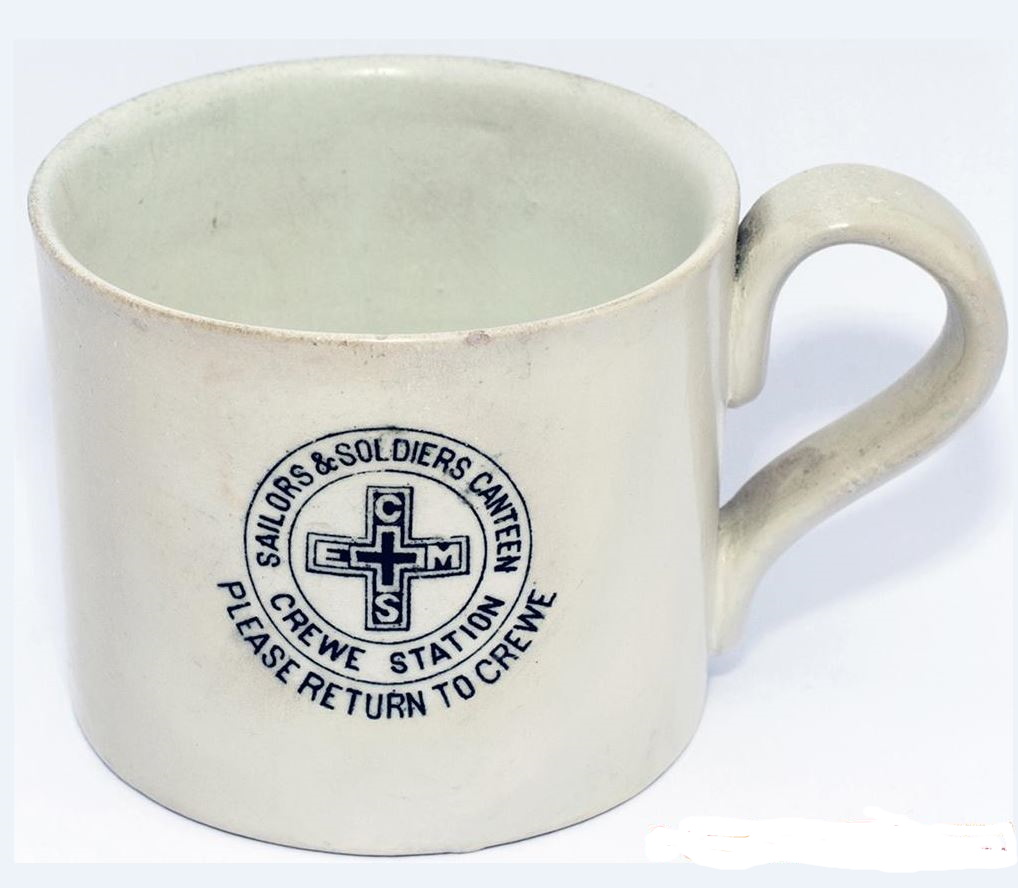
Many soldiers were changing trains at Crewe Station and indulging in a meat pie, sandwich or cake and a mug of tea, coffee or Oxo at the Sailors and Soldiers Rest while they waited.

However, on the night of Friday 26th September a period of disruption lasting nine days began. A strike of 400,000 railwaymen (members of the NUR and ASLEF trade unions) had been called in response to a reduction in the rates of pay that had been negotiated in the war years.

Extract from the Railway Service Journal, (Journal of the Railway, Clerical, Administrative, Supervisory, Professional and Technical Staff)  1919. RCA is Railway Clerical and Administrative- who decided to stay neutral.

During the strike over 300 men visited the Rest, many of them unable to go any further. According to the Cheshire Observer, some travellers stuck at Crewe converted train compartments into temporary homes, and a wealthy American gentleman at Crewe who offered to pay generously for a special train to London was refused and had to finish the journey by car!

The Rest visitors’ book was well used during this period, with comments ranging from those simply stating that they were stranded to slightly more witty offerings:

Comment made by L. Cpl. J. Kewley and Cpl. R Kewley of the South Lancs Regiment, otherwise known as the "The Pe’kewley’ar Couple”


Other comments were as follows:

From  another South Lancs Rgt man heading for County Cork:
Stranded at Crewe after 9 hrs ride from London through strike’

Some were heading for the Army base at Ripon:
Stranded at Crewe owing to Railway Strike, just returned from Germany, WHAT A reception’.

Several were heading for the base at Prees Heath in Shropshire and grateful for the Rest :
Stranded at Crewe, a good welcome at Rest Hut’
Just arrived to get demobbed, could not go any further than Crewe at CEMS’ (Church of England Mens Society, the organisers)

Corporal Essen of the Northants Regiment (we forget how young many of these lads were):
‘Demobb on My Birthday, 20. Held up owing to Strike.’ 

Driver S. Hooley, Royal Army Service Corps heading for London:
Stranded owing to the Strike after fighting 3 ½ years for liberty’

Two members of the 1stArgyll & Southern Highlanders:
Gott strafe the Strikers’ and ‘Double ditto’

Lots of other comments:
Fighting for your Country for 3 years, Tommy has to walk home’
‘Fortnight’s rest on Crewe Station’
‘A Digger stranded in a strange town’ ‘Saved from the Streets’
‘Stranded owing to our “Comrades” the Railway men’
‘How little one thinks of another’
‘No money no socks no boots’
‘Roll on October, then what-oh for India (Punka fand)’
‘Down with J.H Thomas’  (ie General Secretary of the NUR)

From 2 members of Kings Own Yorkshire Light Infantry from Sheffield:
‘Damn NUR’  and ‘Another Pint Please’

Someone wished them well…
Every wish for a Striking Success’

Many were just grateful for what the Rest provided:
Most grateful for kindness and comfort when stranded’
‘Stranded – Sweet cup of Tea’
‘This place indeed is a friend in need, from Palestine’
‘Cheered 4 weary comrades. Stranded on Demob’
‘Many thanks for a good haven’

From W. Lloyd (Southport) of the 1st Battalion The King’s Regiment, late Liverpool Pals (interesting handwriting!) Says he visited the delightful place on the day he proceeded for demobilisation. His mate from Walton says similar.


The stranded troops were from many different units including the Army Cyclist Corps, Sherwood Rangers, Royal Air Force, Royal Army Medical Corps, Australian N&M Forces, Royal Army Service Corps, Royal Engineers Signals, HMS Eagle, HMS Kendal, 1st Battalion Welsh Guards, Argyll & Southern Highlanders, RASC Remounts, Royal Marines, Machine Gun Corps, SS Dakar, Tank Corps and many other Regiments throughout the country. Many were heading to or from various camps such as Brocton, Grantham, The Curragh, Aldershot, Tidworth and Woolwich.

After nine days of strike action, the government agreed to maintain wages for another year. Subsequent negotiations resulted in the standardisation of wages across the railway companies and the introduction of a maximum eight hour day.


Friday, 26 July 2019

June 1919 at the Sailors and Soldiers Rest


This blog post was written by our volunteer Susan Chambers. 


The visitors' book from the Sailors and Soldiers Rest at Crewe Station (D 4998) records over 1600 troops passing through in June 1919, many of them jotting down various comments alongside their names and service details. Some were travelling to and from various Army bases from all over Britain, (eg Sniggery, Lark Hill, Aisne Barracks) and many were returning from Europe and further afield: Dublin, Cologne, Mons, Constantinople, France, India, Mesopotamia, Salonica, Palestine, Eastern Turkey, Alexandria, North Russia to name a random few.

Sailors from HMS Caesar, Dauntless, Valkyrie, Erin, Caledon, Conqueror, Lion, HM Submarine L17, Minesweeper Buckie, were calling at the Rest, no doubt for the endless supply of mugs of tea!

Prices of essential items from the Rest's records. 


The visitors books are a fascinating source of information on the aftermath of the Great War, and the time it took to disperse the troops since the Armistice; and so many of them were off to deal with other problems in the world, such as Ireland, India and Russia.

A number of Canadian troops based at Kinmel Park Dispersal Camp (near Rhyl), were passing though the station after having had a brief  break before sailing home. Several soldiers had died in early March in a riot at Kinmel, prompted by their frustration at the slow progress in repatriating them, which entailed  a complex business of medical testing, clothing and equipment issue, and long administrative form-filling, after which they were sent on leave before returning to Kinmel ready to set off for Canada.  

However on their return to camp they often found that their allocated sailing was cancelled because of strikes or unavailability of a ship (or even preference given to Americans, it was suggested).  The incidents in March had stemmed from their bitter frustration.


Comments from the Canadians included:
                                           
‘another week to stop in British Isles’

‘me for that next boat to Canada’

‘Coming back off last eight days leave with Big head to be Demob.’

‘Big Head before Demob’ (Big Head -?hangover?)

‘Returning to “Gods Country” next sailing’

Some of the Canadians signed themselves as being from the ‘Little Black Devils’ (Royal Winnipeg Rifles).

Several men from the 3rd battalion North Staffs Regiment Band were heading for the Curragh Army Camp, County Kildare to assist with the Irish troubles;  

Gassed at Mons’  

'The above is a photo of an aeroplane out of sight’

‘I wish I was a Corporal’

On June 24th and 25th a total of twelve men of the 2nd Battalion of Seaforth Highlanders signed the book, recording that they had arrived from Fort George in Inverness and were on escort duty for German soldiers being taken from Scapa Flow to an interment camp near Oswestry. There was some confusion amongst the allies as to what would be done with the German fleet, but rather than hand it to the enemy the Germans had ‘scuttled’ their vessels (sunk them) on June 23rd:


‘Escort Duty. Taking Jerry from Scapa Flow to Oswestry, Wales (some job)’


 Many men were from Prees Heath, the huge Army camp near Whitchurch, and one from the Royal Army Pay Corps noted:

'Diddled out of breakfast this morn at Prees Heath Dispersal Station due to usual Army muddling. Very glad I was diddled after enjoying your excellent fare in this establishment’.

From two Royal Enniskillen Fusiliers: Get a new pen’ ; ‘Here Here a New Pen, yes’.  

And later the same day from an Australian: ‘Good…not the pen’ and from a Mons soldier ‘This is a fine place but a D….rotten pen’.

It’s interesting to note how often ‘civility’ is mentioned, as if the troops were not accustomed to it:

'First civility received since 1914’

'Civility, which is a lot’

'Respect & Civility at Crewe YMCA’  


‘It is a great pleasure to be in a civilised country’,  from a Corporal in the Royal Scots just returning from Russia, and from a Sergeant travelling with him ‘No Blockhouse, No Snow, No Bolos’ (a sort of machete much used in WW1)


A few random jottings:

‘Watching others get their ticket (official discharge) is good sport, some may say, but I don’t. You soon get stricken down with the latest disease “Dispersalitis”.

‘Dinkum, everything in tip-top order’ from a member of the Royal Australian Air Force Base in Queensland.

24th Battalion Machine Gun Corps ‘Badly Wants to get Home. London’

‘Good luck to the lady who gave us the dinner, her praises I shall sing for ever & ever’

‘Tired , hungry & broke but received a Hearty Welcome’

‘Demobbed today, plenty happy and glad’

‘Any volunteers for North Russia?’

‘A friend  in need after 36 hours. The Last lap’

‘Tray bonne’ ‘Tray bond’ ‘Dobra’ ‘On his way home Napoo’

‘Happy Though Married’  ‘Happy and not Married’ followed by ‘Lucky boy’

‘Going to see my girl’.


Friday, 24 May 2019

The Month of May 1919 in the Sailors and Soldiers Rest


Crewe: Soldiers' Sailors' Rest, Nantwich Road (ref. c00801)


The signing of the Armistice in November 1918 ended the major part of the hostilities of the First World War. However, it took many more months to organise the return of the vast numbers of men scattered across the globe. 

One of our previous blog posts, “Crewe Station - the Heart of Britain’s Railways in World War I”, focuses on the Sailors and Soldiers Rest at Crewe Station and the two Rest visitors’ books held at Cheshire Archives.

These books give a fascinating glimpse into the experiences of the men that stayed at the Rest. Many called in at the Rest for a cup of tea, a meal, or a bed for the night, while others killed time between trains. 

Their comments often included grateful remarks about the hospitality, their relief at being demobilized, or regret at having more time to serve after a spell of leave.


A copy of a local news magazine published in March 1916 by Eardleys, the major printing company in Crewe, is pasted into one of the visitor books and states:

“The crude verses the men have written, the sometimes misapplied quotations, and the slang methods of expression, form an interesting study and throw a curious light upon the varied personality of the visitors.”

Battles were said to be fought over again, trench incidents recounted, and, according to Eardley, “…one has an excellent opportunity of studying the tranquil humanity which makes Tommy and Jack conspicuous among the fighting units of the world”.

In the month of May 1919 over 2,000 men passing through Crewe signed the book, well illustrating the world-wide nature of the Great War. Destinations included Cape Town, New York, Miami, Victoria BC, Adelaide, Nicaragua, Johannesburg, Moose Jaw Saskatchewan, and Arkinsaw, and of course many places in Britain including Chester. 

Journeys had started in Germany, Italy, Palestine, France, Bulgaria, Malta, naval bases from Scapa Flow to Plymouth, and  RAF airfields including Shotwick, (a few miles from Chester), and RAF Shawbury in Shropshire.  Many were travelling to and from Prees Heath, a massive army camp near Whitchurch.

A number of the troops, including many from the Royal Field Artillery, were heading for North Russia, via Crewe, as part of the Russian Relief Force. This was partly to keep the Bolsheviks back whilst the allies were evacuated and also for other plans that Winston Churchill was said to have devised.


Some other messages from the troops included:

“Fed up waiting at Crewe 5 ½ hours”

"Is the bacon still rationed? Once more unto the breach”

"Treated extremely well at Crewe”

“Always open when others are closed”

"Waiting for an airship”

“Cymry am byth”

“Tray Bon”

“Puggled to the wide” (said more than once!)

“I wish the pubs were open, I am dry”

“Here all night without a pint” (the Rest was established by the Church of England Mens Society in a Temperance Union mission room...)


And from a member of the Field Survey Battalion, Royal Engineers:

“If on earth there is some bliss, It is this – It is this – It is this!”

It is interesting to attempt to trace the details of some of the men who stayed at the Rest using online resources. For instance, Acting Lance Corporal Walter Shard, formerly a joiner of Towers Cottages, Poynton, joined up in September 1914. 

He was a hospital orderly in the Royal Army Medical Corps for 3 ½ years and in August 1918 he contracted Trench Fever, resulting in pains around his heart and shortness of breath.

He left the following heartfelt phrase in the Visitors' Book: 

“Happiest day of my life viz:- FINAL DEMOB”


This blog was written and researched by one of our volunteers, Susan Chambers. Susan will be blogging more about the Sailors and Soldiers Rest in the coming months - check back soon to hear more stories from Crewe!


Monday, 1 April 2019

Crewe Station - the Heart of Britain’s Railways in World War I


Crewe Railway Station
(Cheshire Image Bank c10557)
Throughout the years of the Great War a vital role was played by Crewe Station in Britain’s battle to keep men and supplies moving to where they were needed, at home and abroad. The station was a scene of constant activity, bustling and busy, day and night.

Holyhead boat trains, Scottish expresses, the Irish Mail, the London, Plymouth and Dover trains, the Travelling Post Office, ambulance trains bringing the wounded to northern hospitals, all called at Crewe.  Navy men going north to the Fleet at Scapa Flow, Army men heading south towards the Front in France and Belgium, plus vast supplies of shells and armaments all went by rail. Around 300 trains a day used this vital link, being shunted, marshalled and watered, before they steamed out again.


Crewe: Soldiers' Sailors' Rest
(Cheshire Image Bank c00801)
At any one time hundreds of soldiers and sailors could be seen around the station, awaiting their connections, passing the time in ambling along the platforms, taking a nap in front of the waiting-room fires, and sometimes joining in a round of ‘Tipperary’ to an accordion accompaniment.


Book-stalls, telegraph offices and refreshment rooms were always open, and so, from spring 1915 was the famous Soldiers’ and Sailors’ Rest, next to the station, where a meal and a bed could be had anytime of the day or night. Later in the war a trolley service with urns was set up to visit the trains which were only stopping for a short time, and to provide the troops with a welcome mug of tea before they steamed off again to continue their vital journeys. The station rest and refreshment services for military personnel in transit were organised by CEMS, the Church of England Men’s Society.

Crewe: Soldiers' and; Sailors' Rest
(Cheshire Image Bank c00802)

In the photograph above, the Soldiers’ and Sailors’ Rest visitors’ book can be seen on a stand in the centre of the image.  Twelve visitors’ registers were signed by 130,000 men since April 1915; the final two registers, covering 1919, are lodged with us at Cheshire Record Office (reference D 4998). These are a fascinating record of a brief spell in the lives of thousands of men a hundred years ago, some being demobilised, some going on leave, and some back to their regiments, many on long journeys to far distant parts.

A sample index of over 1000 men adding their names to the visitors’ book in March-April 1919 has been compiled by our volunteers. We will be posting extracts from the book on Twitter over the coming weeks – follow us @CheshireRO to keep updated!