Pages

Showing posts with label Northwich. Show all posts

Monday, 24 January 2022

18 Months of Mystery Image Mondays

Perhaps you are familiar with our regular twitter campaign #MysteryImageMonday? Mystery Image Mondays started life 18 months ago, to crowd-source information about images held at Cheshire Archives and Local Studies puzzling our Local Studies Librarian. Over 200 images later, Mystery Image Mondays are drawing to a close as a regular feature (they’ll still pop up from time to time when we have more images we need help with!), so what better time to review those mysteries you’ve helped us solve, and those which still elude us…? 

The first Mystery Image Monday went live on Monday 29th June 2020. Two images were used: c09050 and c10383. The tweet generated much interest, and both images were successfully identified; The Crewe Arms in Spurstow, and the Verdin Baths at Northwich respectively. 


At the time of writing (4th January 2022), 211 mystery images have now been posted on twitter for all those budding detectives out there. Of these 129 went on to be successfully identified. Many include Cheshire places and buildings not previously covered by the Cheshire Image Bank (CIB) collection and are now available to view online, such as Gibbet Mill at Great Saughall (c13383) and Hale Cemetery (c08809). 


Other resolved images include a salt arch in Northwich (c06765), the Mainwairing Arms in Over Peover (c11936), St. Luke’s Church Winnington (c06534), and Benger’s Foods Limited Head Office in Holmes Chapel (c12939). The art deco frontage of Benger’s Food Ltd. is shown below, located on London Road. Benger's Foods, originally Mottershead and Company of Manchester, occupied the purpose-built premises in Holmes Chapel from 1938, designed by J.H Andrews and Butterworth of Manchester. Benger's manufactured a food supplement that at one time was regarded as essential in the care of young children and expectant mothers. In 1947 Benger's Food was bought out by Fisons Limited, who based their pharmaceutical division in Holmes Chapel, and then later Sanofi Aventis. The building was demolished in August 2015. Also pictured is the Mainwairing Arms, Stocks Lane, Over Peover, c1911, with a sign just visible listing John Street as licensee. He is listed as such in the 1911 census, aged 52. It is now called the Whipping Stocks Inn. At first, we thought “John Street” might be the name of the road, but thanks to the detective work of a twitter follower we now know the true location! 


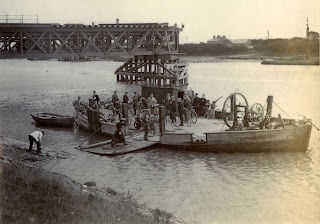
One of our favourite resolved images has to be an image of the River Dee at Queensferry, taken from the Cheshire side of the river in March 1897 (c13297). Thanks to members of the Anfield Bicycle Club who contacted us, we now know the location of this image, with the telescopic Victoria Bridge pictured, partially retracted, with the Anfield Bicycle Club on the ferry. The Anfield Bicycle Club spent Easter 1897 in Wales, riding there and back via Wirral and Liverpool. 

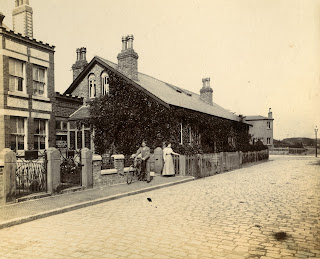
Recently we were able to identify c13331 as being Grove Road, Hoylake at the turn of the 20th century, thanks to a keen-eyed twitter follower. @RealAleCyclist spotted a small sign on one of the buildings and pointed out “First one R Bird @ Co House and Estate Agents. Old business directories might help with this?” Our Local Studies Librarian used our online trade directories and in the 1902 Kelly's Directory of Cheshire, under Agents - Land, House and Estate, found "Bird, Richard, jun. & Co. 4 Grove Road, Hoylake", which seemed to fit the bill nicely! @RealAleCyclist agreed and included a screenshot from Google Maps showing the right location. Another mystery solved! 


We do however have numerous images which remain a mystery. These include a group photograph outside an office (c06768) and the ruins of a country house or castle (c11948). You can peruse more online at our Flickr album “Mystery Images Unresolved” and on the Mystery Images Popular Collection on the Cheshire Image Bank. If you identify anything then please do let us know via RecordOffice@cheshiresharedservices.gov.uk


Lastly, we continue to digitise more of our visual collection, which will no doubt unearth more mystery images. So, follow us @CheshireRO on twitter and @cheshire_archives on Instagram, test your detective skills and knowledge of the Cheshire area, and take part in future #MysteryImageMondays!

Wednesday, 8 September 2021

Cheshire's Emergency Services

September 9th is Emergency Services Day (or 999 Day) in the UK, and one of its aims is "to promote the heroes who serve/have served". As we recognise the vital role the emergency services play in our communities, Cheshire Archives and Local Studies is looking back at first responders from times gone by. There is a proud tradition of people working for the emergency services in our county - read on for a glimpse of the records we hold about the fire, police and ambulance services of Cheshire’s past.


FIRE SERVICE

There are many records relating to the fire service, going back centuries. As early as 1570, the City of Chester Assembly’s minute book contains an order on the provision of fire buckets, with every member of the Assembly having to provide and maintain a certain number. Councilmen were each responsible for one, Sheriff Peers provided two and Aldermen four (ref: ZAB/1/123). But before too long this had changed: the minutes of 24th August record, 
“Whereas buckets provided against fire under a former order (Jan 20th 1570), are by now wearing out…all strangers admitted in future to the City, are to pay for the cost of providing two buckets.”
Several fires had apparently recently occurred. (ref: ZAB 1/258)

We have archives covering a range of fire services from across Cheshire: from records of Tarporley Fire Brigade from the start of the 20th century (ref: D 5156) or fire service-related material in archives of local councils like Lymm (ref: LUL/5) and Northwich (ref: D 7474/78), to how much it used to cost to fight fires (ref: DCH/GG/
37), medals commemorating firefighters’ service (ref: ZDF 9-13) and photographs of ceremonial occasions (ref: ZDF 32-62), among many more. But a significant number of our records are from Chester Fire Service, the origins of which date to the early 19th century.


These photos show an extract of the Schedule of Fires from 1925, which gives details of supposed causes of fires and how they were extinguished. And the annual reports of the Chief Fire Officer from 1955-60 are similar, but have further details relevant to the era such as recording how calls for the fire brigade were received (by ‘exchange telephone’, ‘private telephone’ or ‘caller at the station’, for instance). In both volumes, fires are attributed to children playing with matches. The Annual Report of 1957 notes a fall in some causes of fire over the previous year, but states: 
“causes traced to the carefree disposal of lighted cigarette ends and young children being allowed access to matches regrettably remains almost constant.” 


POLICE SERVICE
As well as the fire service, we also hold records of the Chester City Police Force from 1836 to 1945. Popular items in the collection include photographs of criminals charged and convicted in the 1860s and 1870s, for crimes like stealing an umbrella or a shawl, embezzlement or begging (ref: ZDPO/2). There are more modern records relating to the police too, such as archive material from the Gay Police Association, a police staff association that had members from all UK police forces and ran from 1990 to 2014. Document reference D 9081/245 is a 2003 training resource for ‘Policing Lesbian, Gay and Bisexual Communities’.

Our Local Studies collection has a large range of books, pamphlets and articles related to the emergency services. Along with titles showing how the police service has developed over time, for example A Short History of the Macclesfield Borough Police Force (ref: 114735) or Peelers to Policemen (ref: 016802), one that gives a flavour of life as a police officer in times past is A Policeman’s Notebook by Thomas Smethurst (ref: 223013). It recreates the notes taken by a member of the Stalybridge Police Force in 1914 and is an account of incidents in the police “in the days when birching was a legitimate punishment, when playing games in the streets on Sundays and letting a chimney set on fire were offences, and when attempted suicide was punishable”.


AMBULANCE SERVICE


Some archive material can come from unexpected sources. This image of an early ambulance is from the records of Mostyn House School in Parkgate. It is a postcard showing a British Red Cross ambulance car for the Italian Army in 1916 and, according to a note by the head teacher printed on the back, its £475 cost was partly funded by “the boys, old boys, parents and friends” of the school.


Also from the First World War, we have an application to Warrington Borough Council for a proposed ambulance station. The detailed drawing shows aspects of the building like a nurse’s room and treatment room - but also space for the ‘ambulance carriage’.


From the Second World War, several files of correspondence survive from 1940 about ambulances and first aid, such as detailed information about medical supplies in Bollington Urban District Council’s archives (ref: LUB 2638/1/8-9). St John’s Ambulance is also covered, for example with certificates for an Annie Rowe in ‘First Aid to the Injured’ and ‘Home Nursing’ gained in 1939 (ref: EMC 15/24/18,19), and later ambulance service-related records include the Ambulance Service Scheme within the 1946 National Health Service Act (ref: ZDDH/5/1), amongst others.

But as we mark Emergency Services Day, we are fortunate to have some images of first responders of the past. This c.1916 photograph from Cheshire Image Bank is an ambulance from the Red Cross Auxiliary Hospital in Bromborough – the ambulance driver is thought to be a surgeon.


This photograph shows the Northwich Police Force outside their police station during the 1910s.


And these are members of the City of Chester Fire Brigade, c.1920 - complete with their fire engine and dog mascot.


All of these records and more are available to view at Cheshire Record Office in Chester, and our online catalogue can be searched here.


Monday, 1 July 2019

Rebellious, Radical and Remarkable: Remembering John Tomlinson Brunner

This blog post was written by our volunteer, Megan Grainger, to commemorate the centenary of the death of Sir John Brunner. Sir John Brunner was a British industrialist and co-founder of the chemical firm Brunner Mond and Company. He was Liberal M.P. for Northwich from 1885-1909 and was a Privy Councillor in 1906. 


“….a career of almost unexampled prosperity’


This statement made by the Western Daily Press provides the most apt introduction to Brunner. It defines his continued significance; the reason he remains embedded in the History of the Northwest and why a hundred years after his death we continue to commemorate the life of Sir John Tomlinson Brunner. 

The quote itself is a direct reference to the enormous financial successes of Brunner, Mond and Co, and it was through this success that Brunner was able to fund his own philanthropic agenda. In remembrance of the centenary of his death on the 1st July, this posts seeks to commemorate not simply the financial and political success of John Brunner but his character, and his dedication to his workmen, to his locality and to progressive reform, as it is this that remains his greatest legacy.

The perseverance and dedication that went into Brunner's endeavours is evident in the projection of his career. Brunner held a clerical post at Hutchinson’s alkali works in Widnes for a number of years, a position that was fundamental to the course of Brunner’s life. It provided him with invaluable business acumen and was the meeting point for his friendship with German chemist Ludwig Mond, a friendship that would become the catalyst for the company that transformed Brunner into a powerhouse of the British chemical industry. By 1873 the works at Winnington had been purchased and Brunner, Mond and co. was in its infancy. By 1888 a memorandum between E J. Milner and Brunner includes a letterhead identifying the expansion and success of the business, listing works at Winnington, Northwich, Betchton and Sandbach.

c11221 Brunner Mond & Co. arch.
The motto on the arch reads: "Northwich thanks best friend Sir John."

However what was truly remarkable about Brunner is best demonstrated through his condemnation of a compulsory pension subscription for the working classes. Written in November 1888 between Brunner and his colleague the letters highlight Brunner’s commitment to fairness, he states, ‘such a rule to me is hateful.’ He found the scheme to be coercive, obliging his workers to sign over a percentage of their hard earned wage to the company and instead proposed sacrifices on behalf of the company would be better channelled into facilities, such as, societies and places to bath.

This example of altruism is not singular and a Northwich Guardian from 1899 identifies further the many ways in which Brunner sought to support his workers. It outlines the introduction of a sick and burial club, free medical care for those in service, a week’s paid holiday and also details the pride of Brunner in taking even further the employer liability of Act of 1881 by providing compensation for any death or injury at work regardless of fault.

As Brunner, Mond and co. expanded so did Brunner’s ability to give back and he did not restrict his benevolence to those in his factories. Compelled by his Unitarian beliefs imparted to him by his father, Brunner championed education; he funded schools, a free library at Northwich and endowed the chairs of economics, physical chemistry and Egyptology at the University of Liverpool.

c08335 Portrait of Sir John Brunner in the foyer of the Brunner Library

The courage and conviction Brunner demonstrated in business was no less fervent in his politics. Elected liberal MP for Northwich in 1885 he carried his progressive approach all the way to Westminster, earning recognition for his commitment to liberalism in 1906 when he became a Privy Councillor. During his time in politics Brunner championed home rule in Ireland, trade unions and welfare reform, he even braced the scorn of supporting a conciliatory approach towards Germany after WW1, so embedded were his beliefs to what was just. He was described as aggressively liberal, and perceived as radical but never was he apathetic.

There is much to remember Brunner for and in the vein of remembrance it is pertinent to end with a quote from Brunner himself. One that defines his beliefs, his forthright character and the humour he retained even in his disdain for those that refused to keep up:

‘The Liverpool Chamber of Commerce is a bunch of old toffies. They drive out of commerce any man who shows signs of a reformer in any direction and I do not consider them deserving of help.’


This blog post was written using the following items from the Imperial Chemical Industries collection at Cheshire Archives:
  • DIC/BM7/11 Original letters and enclosures from John Brunner and his secretary Thomas Ellis, chiefly to Edward Milner, relating to affairs at Winnington and Sandbach works, and within the alkali industry in general. 22 Aug 1885-1815 Nov 1888
  • DIC/BM15/43 Miscellaneous correspondence and other papers compiled by A S Irvine, Manager, ICI Alkali Division Information Service, relating to the life of Sir John Brunner (1842-1919).
  • DIC/BM7/2 Chiefly comprises letters written by Ludwig Mond to John Brunner during a visit to Belgium and Germany Aug-Sep 1876. Relates to business and family affairs. 1876-1877
Images are from Cheshire Image Bank