Pages

Tuesday, 30 August 2022

The Bawdy Court at Chester

We are fortunate in the range and volume of records of the Diocese of Chester church court which we hold, dating back to the early sixteenth century. Meanwhile Chester Cathedral has the only complete surviving consistory court room in England so we can picture how and where cases were heard. One of our researchers, Pat Cox, has begun to publish images and transcriptions on a new website so with new easy access to the court documents, the stories really come to life. Thanks to Pat for this introduction to the records that fascinate her and her remarkable project.

This type of court was formally known as the consistory court but was popularly known as the ‘bawdy court’ because of the scandalous goings-on revealed by some of the men and women who appeared there. The influence of the church touched almost every aspect of sixteenth-century life and a wide range of matters came within the jurisdiction of its courts, including supervision of personal morals along with more formal matters.

I first started to look at these records some years ago, while researching for a degree, and I found them very difficult to understand because, apart from the difficulties of deciphering the handwriting, much is written in Latin, and heavily abbreviated formulaic Latin at that. I once asked an eminent scholar whether there was any quick way to get to grips with interpreting the documents, and he assured me that there wasn’t – he was quite right! A lot of transcriptions and translations of similar documents have been published, but very few of these are accompanied by a copy of the original document, so this is what this new website is all about. I would like to record my thanks to the staff of the Cheshire Record Office for the kindness and patience which they have extended to me over the past few years.

It will take quite some time to upload all the cause papers and related information and so it is an ongoing project, but I do hope that you will find the website interesting and useful as the information in these records tells us so much about the attitudes and daily life of 500 years ago, so head over to https://www.chestercausepapers.org.uk/ and take a look at what our ancestors got up to!

Tuesday, 23 August 2022

A Farmer's Life: The Diary of James Higginson aged 57½ (part 2)

Read Part 1 of A Farmer's Life: The Diary of James Higginson aged 57½ here.

The diary covering 1817-19 gives us an insight into a particular 15 months in James Higginson’s life but what else do we know?  We can tell from his writing that he was educated.  His diary entries show that he employed several men, his financial dealings indicate he was reasonably well off (he loaned money to friends and received dividends), he was able to take time away from the farm to visit his brother who lived some distance away, and we know he liked to socialise, but we hold other sources that add more information.

At the time this diary was started, James and Mary would have been 57 and 42 years old and had been married for 17 years.  They had three sons, Charles, 16, who worked on the farm, Edward 11, and James, 7.  We know this because their marriage, their burials, and their children’s baptisms are in the parish registers for St Bartholomew, Barrow.


When James died in 1835 at the age of 75, he left everything to Mary.  We have his will which he signed just a few days before he died.  By then, the man who had written so neatly in the small notebook was too unwell to sign his name and could only make his mark.


We know that Mary continued at the farm until her death in 1861 as the Tithe Apportionment of 1839 lists her as Occupier.  Searching our Tithe Map site using her name will show you the extent of the land the Higginson’s farmed.


We also know that by 1851 her sons Charles and James no longer lived in the family home.  Census returns for 1851 and 1861 show that her middle son Edward still lived with her and helped run the farm.  In 1851 the household consists of: Mary, Farmer of 86 acres, Edward, Farmer’s son, plus a Dairymaid, Housemaid, Waggoner and Cowman.  The next census in 1861 was the year Mary died.  She was 86 years old and presumably needed more help running the household as her niece Alice Woodier is included as Housekeeper.  There was also a Dairymaid, Housemaid, Carter, Cow Boy (aged 14) and Stable Boy (aged 12).


The newspapers of the time help to flesh out events that James only mentions in passing such as the deaths of Princess Charlotte and Queen Charlotte, mentioned previously, giving us a taste of life in the early 19th century.

One particularly gruesome event was recorded briefly on Saturday 9th May 1818.  It came between a sentence about his cows and a note on the price of butter: ‘My wife & her Son James at Chester seeing the Two men to suffer’.  Hold on - what?  The Chester Courant of 12th May 1818 carries a report of the execution by hanging of 2 men, Abraham Rosthern and Isaac Moors.  Rosthern had stolen items from his employer, namely 7 pictures, 1 looking glass, 5 silver teaspoons, 1 pair of silver sugar tongs, a drinking horn, a quantity of jaconet muslin, gold thread and several other articles.  Moors had broken into a house and stolen various articles of linen and drapery.


The Courant reported that a great crowd came to watch the executions, estimating that 6000 people attended.  In amongst them were Mary Higginson and her youngest son James.  The parish records have James being born and baptised in August 1809, so in May 1818 he would only have been 8 years old!  Whether he was brought along as a form of entertainment or to terrify him into living an honest life, we’ll never know.


All of these items and more are available to view at Cheshire Record Office in Chester.

Thursday, 4 August 2022

A Farmer's Life: The Diary of James Higginson aged 57½ (part 1)

In 1817 you could buy a small notebook from Mr Poole of Chester for 1s/6d.  James Higginson bought one and wrote in it every day, except Sunday, from Monday 13th October 1817 until Saturday 16th January 1819.  There were most likely other notebooks before and after this one, but this little diary is all that’s left 200 years later.


James farmed land in the village of Barrow, a few miles outside Chester, and he used the notebook as a daily record of the work of the farm; the weather; weekly trips to buy and sell goods at market; snippets of local and family news; and occasional mentions of national events.  From his writings we know that it was a mixed farm with pigs, dairy cattle that produced milk for the cheese and butter his wife Mary sold at market, and some chickens.  James grew wheat and potatoes, turnips (probably for the cattle) and planted peas in his garden.


Even though writing space was limited, James didn’t just record the daily grind.  There is often a note in the margin or maybe a line given over to local events, leisure time, or words of wisdom for his future self, such as this from 3rd March 1818 when he got drunk with friends and lost a wager: ‘James go no more to Ale houses – mind’.  But like most people who have a few too many and regret it the next day, he didn’t heed his own advice!  He very honestly notes every now and then spending the evening (or the day) at the alehouse, and advice in November to ‘Drink no more wiskey’ is followed a week later with ‘got Drunk a gain. No Better nie Before.’


There were notes of things he bought – flower seeds, waistcoats and britches for himself or his sons, 2 handkerchiefs for 4 shillings and sixpence, an ‘umberbelow’ (umbrella), and a watch for his eldest son Charles.  On one occasion someone came to the house to make Mary ‘a pare of Stayes’ - who knows what Mary thought about such information being recorded for posterity!


In early December 1817 he wrote a derogatory comment on the marriage of an older acquaintance: ‘Old Mr Rite of Norley Marry’d this Week wich I thought too old for much Execution’.  In September 1818 he was very pleased to have sold his pigs for a good price, then wrote a note to remind himself ‘Never sell all your pigs a Gain – but kill one’ because he then had to buy another pig at market to feed his family!

James notes various deaths amongst his acquaintance including a Christmas day burial, and in February 1818 he sadly lost both his brother, John, and sister, Betty, within 3 weeks of each other.  Two deaths of national importance also make it into his diary, those of Princess Charlotte, daughter of the Prince of Wales, and Queen Charlotte, wife of King George III.  Princess Charlotte died after giving birth to a stillborn son and the mourning was national and profound with shops closing for 2 weeks and drapers running out of black cloth.  When she was buried on 19th November 1817 James wrote: ‘Princess Charlottey Interede at Winsor a very Deplorable day’.  A year later the death and burial of the Queen was also recorded: ‘our gracious Queen departed’ but though a notable and sad occasion, it seems to have affected him less.


He closes the notebook with record of wages paid to his farm workers and servants; a list of meat bought; bills paid to maintain his farm carts; money received from dividends and cash paid out; and a list of cows calved with some of their names – Plum, Dunham, Primrose, Little Weaver, Tydey, Nutt, Lilley, Bett, Weston and Cherry.  With every last page filled, our peek into the life of James Higginson ends and it’s time for a new notebook.

Coming soon - in part 2 of A Farmer's Life: Diary of James Higginson Aged 57½, we learn more about James, his wife Mary and some significant events of the time. 

All of these items and more are available to view at Cheshire Record Office in Chester.

Tuesday, 19 July 2022

Holiday Snaps!

Is your phone full of photos that you haven’t got round to printing yet? Before the advent of smartphones, most of us kept collections of holiday snaps - and since photography became popular and accessible from the late 19th century, our ancestors did too. 

Cheshire Archives and Local Studies has a large collection of photographs - many available on Cheshire Image Bank. Here is a selection of our photographs of holidays, from luxury overseas travel in the early 20th century, to the traditional British seaside break. 

These early ‘staycations’ of days out on the beach were taken on Wallasey beach on the Wirral. The photograph below left shows children enjoying the seaside during the 1890s, and below right an unknown group is pictured on the same beach during the 1910s. 


Do you remember having a donkey ride on the beach as a child? These donkeys (below left) were pictured on Hoylake beach in 1911. They took visitors – some in carriages – over to Hilbre Island. The colour image below right is a scene from West Kirby beach, taken during the 1910s. We can just make out some donkeys standing in the background! 


Some people were fortunate to undertake extensive travel abroad, and we have a record of one such family from over a hundred years ago. The Bates family of Hinderton Hall near Neston kept a journal of a motoring holiday in France, Spain and Portugal in 1908. They had their car shipped to Lisbon via La Rochelle and planned to,
“return home in the aforesaid motor via Boulogne, Folkestone and other ports and/or places on the way, having liberty to call at ports in any order and to sail or travel with or without pilots or chauffeurs, until the said motor should arrive at Hinderton Hall Neston Cheshire England and so end the voyage.” 


Here is a photograph from the journal showing their car being loaded onto a ship: 


The journal contains photographs of the places they visited, some of which are still popular destinations today - such as the harbour at La Rochelle and the chateau at Blois in France; the town of Leiria and the hermits cells of Bussaco in Portugal; and the famous Cathedral of Santiago de Compostela on the Camino de Santiago pilgrimage in Spain. 


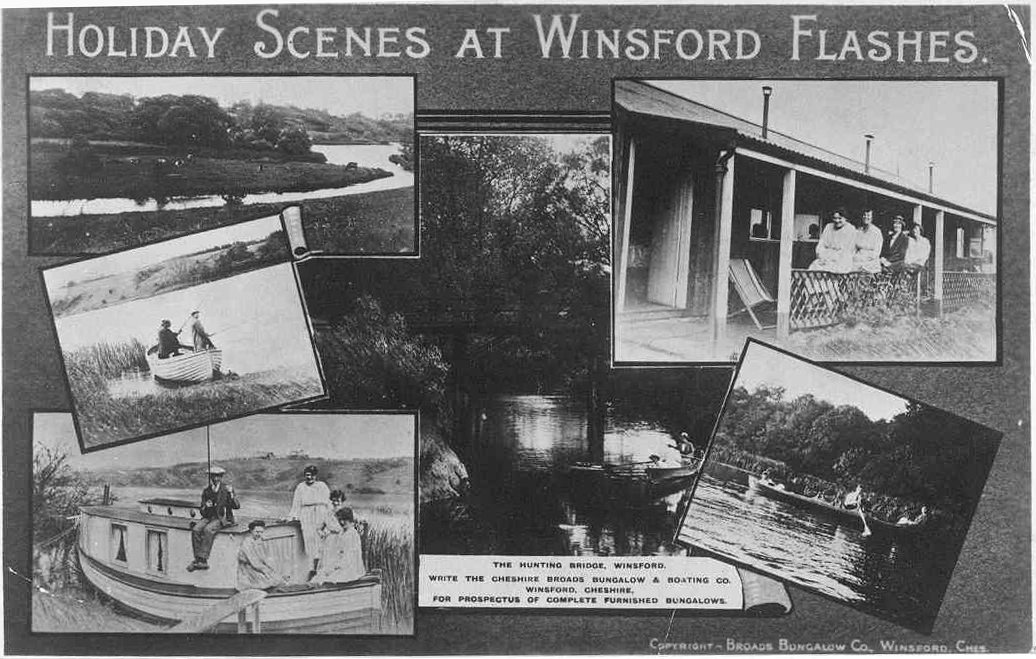
Other holidays were taken much closer to home. The images below were taken on the Cheshire Broads near Winsford. On the left is an advertisement from 1930 for holiday bungalows at the edge of the Flashes near Wharton; and on the right is a group holidaying at the bungalows around that time. 


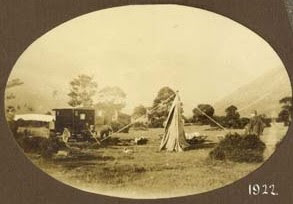
Camping and caravanning holidays started to become popular in the early twentieth century, and we have photos of them in one of our collections - the records of the Baker family of Runcorn. Chemist and university lecturer Harry Baker (1859-1935) was a prolific amateur photographer from the 1880s to the 1920s, and his collection includes images of his family on holidays, including going camping:


Don’t forget Cheshire Archives and Local Studies also holds a wide range of holiday images from before people had access to cameras, including sketches and paintings of holidays scenes, and travel diaries.  A selection can be seen in our Travel Plans blog. 

If you’re going away this summer, don’t forget to take some photos – and then print them out! We wish you a happy holiday. 


All these images and more can be viewed at Cheshire Record Office in Chester. Cheshire Image Bank is available at www.CheshireImageBank.org.uk 

Wednesday, 6 July 2022

Archie's Archives Experience!

This blog post was written by one of our work experience students, Archie, who spent a week with us in June. Thanks for all of your work Archie!

During my work experience at Cheshire Record Office, I discovered plenty of new and genuinely interesting things I didn’t know existed.

On my first day I was able to sit in on a staff meeting and learn about how Cheshire Archives and Local Studies were partnering with local communities, finding them photos, documents and anything else they wanted so that they could hold their own events about themselves. 

I spent some time reading, cleaning and documenting the Mayors Scrapbook from 1936-1979. Not only did I learn about how to properly take care of precious archives and how to keep them in the best condition so other people can view them later on, but I was able to read these small snippets of history, whether they were simple invites to tea from the Mayor and Mayoress in 1941, or a New Year’s card with a quote hoping for peace and an end to the war. It felt like I was there, experiencing it myself. Even just small things told a story, like a letter from the Royal household explaining that the Mayor and his wife wouldn’t be able to get a congratulations letter for their Golden Jubilee for their marriage, which was received on December 25th.


I also helped to check photographs and see if they were on the Cheshire Image Bank or not. If they weren't on the site then I indexed them onto a spreadsheet, and did some research around the people, places and events photographed. Looking at a photograph of a local blacksmith taken in the 19th century, it can only make you wonder who those people were, what they’d experienced themselves and what they did after the photo was taken. These small bits of history, which in the greater scale of things didn’t mean much, represented normal people who lived, grew up and died well before I was born, like a window into the past.


I also used Zooniverse, a website where you can transcribe articles and documents from hundreds of subjects. I was moving information over from patient records from the Parkside Asylum. Stuff like this can be used for studies relating to anything, and could help countless people in research. (You can get involved in the Parkside Asylum project here!)

The people who work at the Record Office are genuinely some of the most dedicated people I’ve met, you can see that they have a huge interest in what they do, and that they want others to be able to know about what they do and use the records they hold.


Tuesday, 21 June 2022

More Than a Shop - a Talking Tour of Chester

More Than a Shop: A Talking Tour of Chester is a historic walking tour by Cheshire Archives and Local Studies. 


In the early 1980s the Chester Archaeological Society recorded older residents’ recollections of life in the city throughout the twentieth century. These oral history recordings were recently digitised thanks to the British Library’s National Lottery Heritage Project Unlocking Our Sound Heritage and the expertise at the north west hub at Archives+ in Manchester.

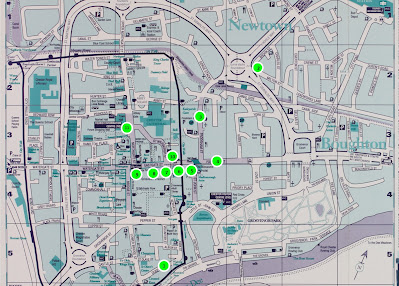
The tour is self-guided, so you can choose which sites you want to visit and in which order (our suggested route is mapped out below, or you can pick up a printed version from our Record Office). 

There is also the option of listening to the recordings on our brand new listening kiosk, just drop in to our searchroom between Tuesday 21 June and Thursday 23 June during our normal opening hours (9am-4pm). We are based at Cheshire Record Office, Duke Street, Chester. 

We hope you enjoy a bit of retail therapy on a talking tour full of memories of shops past - lets get started! 


1:    Welcome to Cheshire Archives & Local Studies where this converted warehouse holds miles of shelving full of records that document almost 1000 years of Cheshire life. Some of these records are oral histories recorded on cassettes, and tape cannot be trusted to survive for decades. Without the National Lottery Heritage Fund project run by British Library and the expertise at the north west hub at Archives+ in Manchester the voices on our talking tour would have been lost. 


2:    Setting the scene – Brook Street: A schoolgirl in the 1920s, whose route to school took her along Brook Street and Frodsham Street, with vivid memories of the sights and smells of shops at Christmas – but look out for the cows! She also remembers cows being driven from the cattle market where the bus station is now along Brook Street and Hoole Bridge to the railway sidings on Lightfoot Street. 


3:    Frodsham Street: ‘Two things couldn’t pass at the same time’ – much like today – chemists, shoe shops and bookshops – how much is that doggy in the window? 

4:    Foregate Street: Hear all about ‘Porky Pie Duttons’ where Marks and Spencers is now – with a sweet factory in the back!

5:    Eastgate Street and Eastgate Row: We now find ourselves in the heart of Chester’s shopping experience for over 200 years. Hear first how Browns, Bollands and Phillipson and Golder jostle for position – and then more details about what would have greeted you at each shop.

6:     Browns first...

7:    …and then Bollands...

8:    …and the curious figures from Venice that promoted the stationer and bookseller Phillipson and Golder. 

9.     Can you imagine taking a seat when you enter a shop and items being brought to you – or even brought to you sitting in your car outside. Welcome to the world of Minshull and Meeson.

10:    What would Browns customers or Mr Minshull and Mr Meeson have thought when F W Woolworth moved in across the street where Next is now? There is no ‘shopwalker’ and browsing is encouraged – and plastic goods arrive. And Woolworths expanded throughout the twentieth century filling the space between Eastgate Street and St Werbergh’s Street which leads us to the Old Market.


11:    Chester is about to open a new market replacing the new market mentioned here. But it is the old market that is brought to life – the china seller who smashes the items he doesn’t sell to the crowd entertain this young lad!

Wednesday, 25 May 2022

The Platinum Jubilee

This year’s Jubilee is a moment in time that is unique. As a once in a lifetime occurrence many people will want to mark this Platinum Jubilee, an event that will feature in the history books. The Jubilee celebrates 70 years on the throne for Queen Elizabeth II, no other British Monarch has reached this milestone. Let us travel back in time and see where it all began.

Over 70 years ago, on 6th February 1952 King George VI passed away peacefully in his sleep. ‘The King is dead, long live the Queen’, as the line of succession is never broken, his 25 year old daughter Princess Elizabeth suddenly became Queen.


On Saturday 10th February, the Proclamation of Accession was read out in the Town Hall Square by the Mayor of Chester, a Guard of Honour was supplied by the Cheshire Regiment who were mounted on the Town Hall steps. After the proclamation, the military band played “God Save the Queen” and the ceremony was brought to an end.


Reports from the newspaper suggest several thousand people were there to witness the proclamation and the mayor ‘led the townspeople in three rousing cheers for her Majesty, Queen Elizabeth II’.

But it wasn’t until the following year, after a traditional period of mourning, that the Queen was crowned in Westminster Abbey on 2nd June 1953. The Coronation ushered in a new period in Britain’s history, following on from her marriage to Prince Phillip in 1947, it gave the public a chance to celebrate moving forward from the dark days of the Second World War to a new era.   


The Coronation was celebrated around the county and many places produced souvenir booklets and special events for the residents to enjoy. Similar to the Platinum Jubilee this year taking place over 4 days, the Coronation celebrations took place over a week.


Some parishes even ran special competitions for the best garden and the best decorated house, issuing certificates for the 1st, 2nd and 3rd placed houses.


Children received a gift to celebrate the Coronation, depending on the age of the child these ranged from mugs and sweets to chocolate and propelling pencils. But it wasn’t only the children that received gifts, senior citizens were also included with many receiving a commemorative tea caddy filled with ½ lb of tea.


The Queen has continued to celebrate milestones in her reign, in 1977 she celebrated her Silver Jubilee reigning for 25 years. Similar to the Coronation, events taking place in London were televised to the nation. The Jubilee was celebrated around the world and street parties were organised.


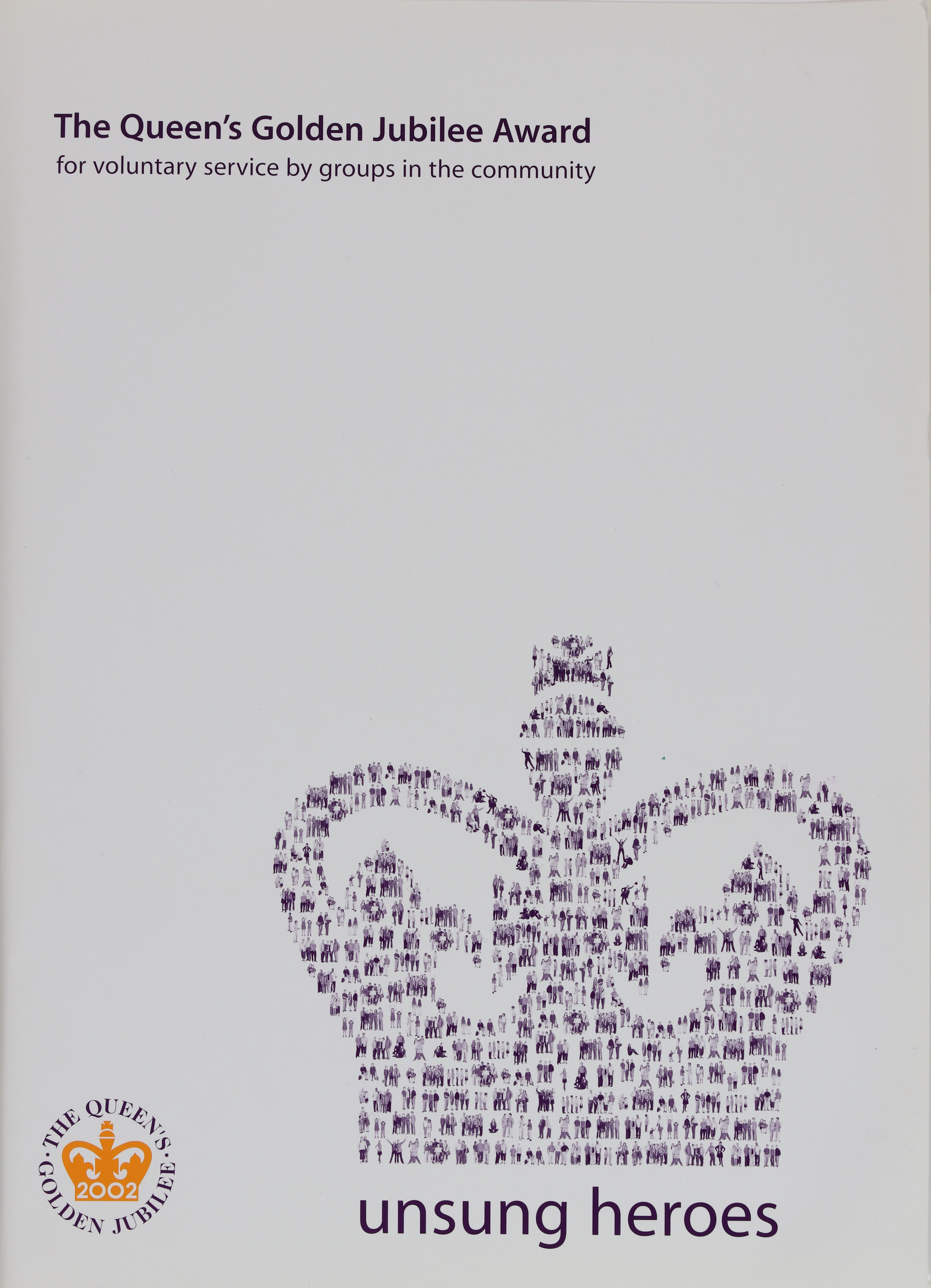
In 2002, the Golden Jubilee was celebrated meaning the Queen had reigned for 50 years. The Jubilee commemorated the monarch’s reign but also celebrated her people and featured 6 key themes including ‘Celebration', 'Giving Thanks', 'Service', 'Involving the Whole Community', 'Looking Forward as Well as Back', and 'Commonwealth'. The Queen’s Award for Voluntary service was created for the Golden Jubilee and is still awarded every year for examples of outstanding voluntary work.


Fast forward another 10 years to 60 years on the throne and the Diamond Jubilee. Only once before has a monarch reached this milestone and that was the Queen’s Great-Great Grandmother, Queen Victoria, who celebrated her Diamond Jubilee in 1897.

In 2015 Queen Elizabeth became the longest ruling Britain Sovereign surpassing Queen Victoria who reigned for 63 years. On 6th February 2017 Queen Elizabeth became the first British monarch to celebrate a Sapphire Jubilee, which commemorated 65 years on the throne.

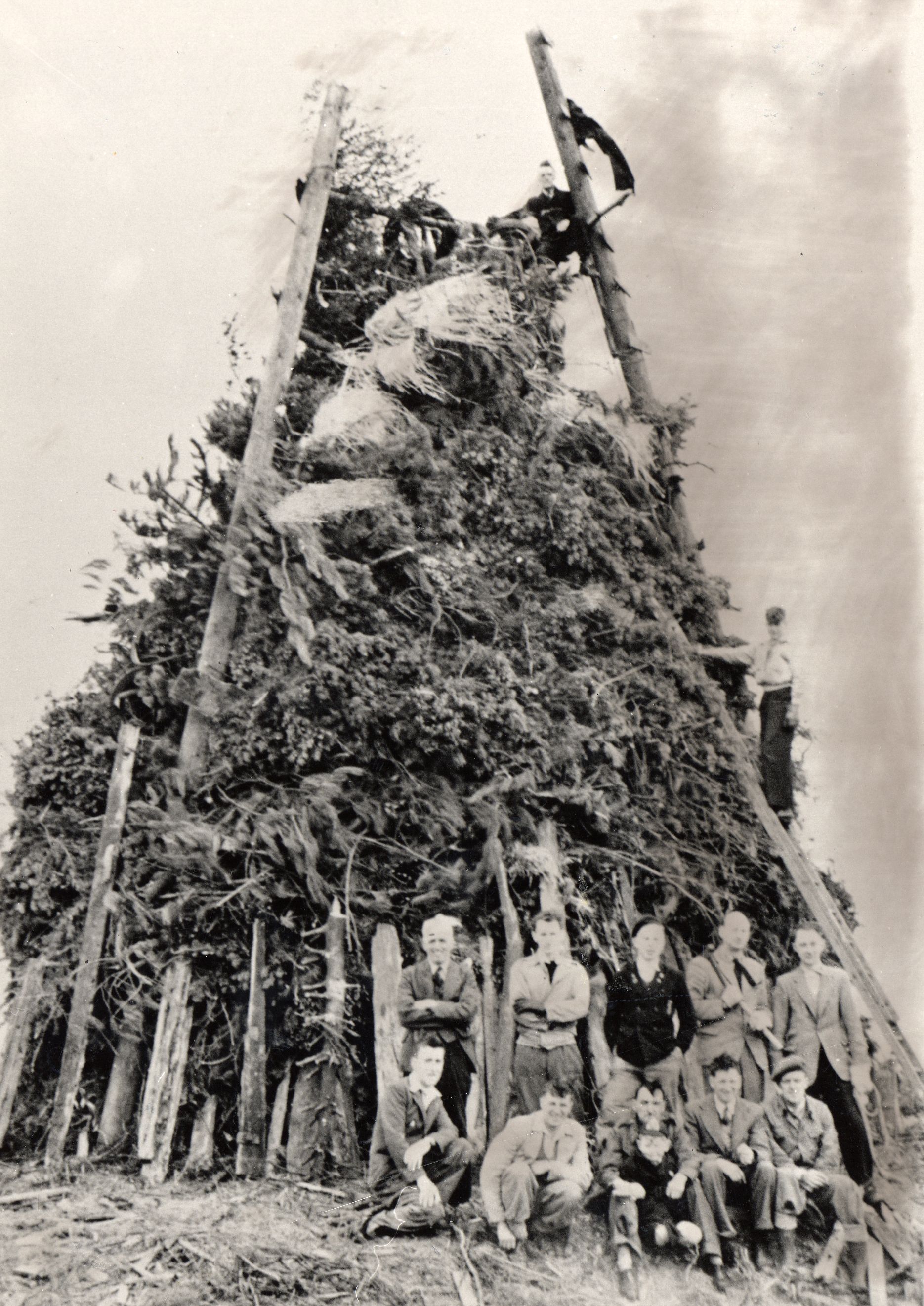
This year's Jubilee celebrations culminate in an extended Bank Holiday weekend when the nation can celebrate this historic milestone. Special beacons will be lit across the country as has been the tradition for the other Jubilees. 


So in years to come, what will you say when asked how did you celebrate this Platinum Jubilee? Who knows, your celebrations may end up in the archives for future generations to see.